News

Electrification & Intelligence Reshape Global Motorcycle Wheel Market: Material Innovation, Regional Industrial Layout and Value-Oriented Procurement Trends

2026-07-15 0 Leave me a message

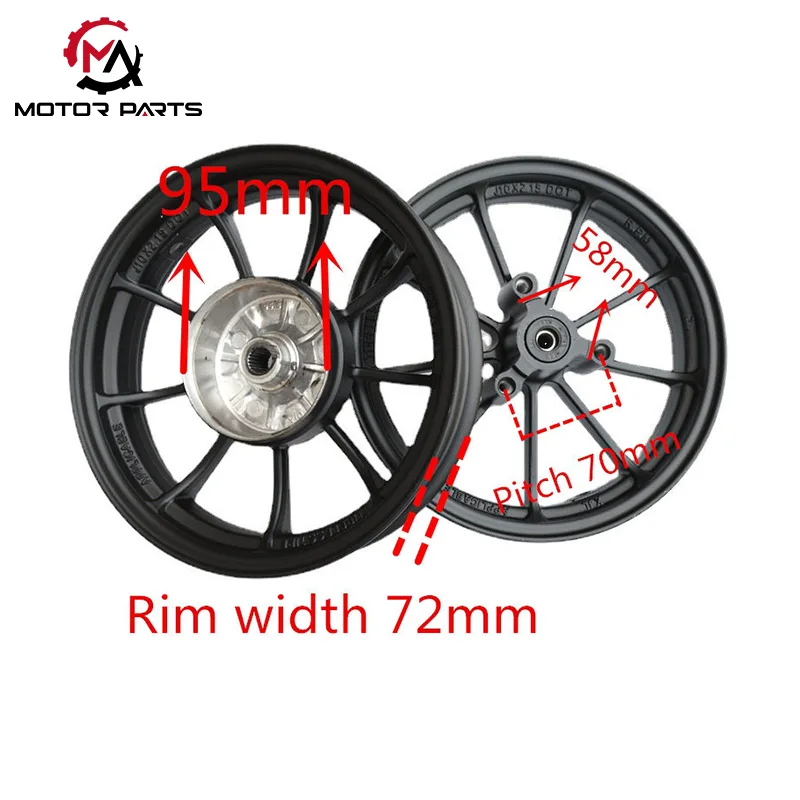
The global motorcycle industry is undergoing a profound transformation from traditional internal combustion engines toward electrification and intelligent systems. As core load-bearing components of motorcycles, wheels and hubs are not only critical to vehicle safety and handling but have also become important benchmarks for measuring overall performance and aesthetic value. Against this backdrop, the global motorcycle wheel market is expanding at a steady pace, while material technology iterations, shifts in regional manufacturing patterns, and the upgrading of procurement decision logic collectively form the central themes of industry development.

 Market Landscape: A Steadily Expanding Global Arena

The global motorcycle wheel market maintains substantial scale with clear growth momentum. This growth is primarily driven by the continuous rise in motorcycle ownership in emerging markets, the strong performance of the sports motorcycle segment, and the specific demand from electric motorcycles for lightweight wheels.

According to the Society of Indian Automobile Manufacturers' report released in April 2026, Indian motorcycle sales reached nearly 2 million units in March 2026, representing a year-on-year growth of approximately 20%. Honda Motor Co. has also maintained its global motorcycle sales forecast for fiscal year 2025, projecting a record 21.3 million units. The robust performance of emerging markets provides a sustained and stable demand foundation for the wheels and hubs industry.

In terms of material segmentation, aluminum alloy wheels and carbon fiber wheels exhibit distinctly different market rhythms:

Aluminum Alloy Wheels maintain their mainstream market position due to the balanced combination of performance, cost, and aesthetics. Forged aluminum alloy wheels offer superior strength and lightweight characteristics compared to cast products, making them the preferred choice for large-displacement motorcycles and high-end customization. The introduction of flow-forming technology enables wheels to further reduce weight and enhance mechanical properties while preserving design freedom.

Carbon Fiber Wheels are in a high-growth phase. Leveraging extreme lightweight properties—significantly reducing unsprung mass and rotational inertia—carbon fiber wheels are transitioning from racetracks to mass production. Their value lies in enhancing acceleration, braking, and handling performance while providing exceptional fatigue and corrosion resistance. Advances in manufacturing processes, such as automated filament winding, prepreg layup, and Resin Transfer Molding (RTM), are improving production cycle times and material utilization, making scalable manufacturing increasingly feasible.

 Technological Frontiers: Process Upgrades Driving Performance Revolution

1. Carbon Fiber Wheels: From Track to Road Performance Revolution

Carbon fiber wheels are redefining the handling limits of high-performance motorcycles. The value chain encompasses upstream supply of high-performance materials including carbon fiber fabric, prepreg, and resin; midstream precision processes such as layup, Resin Transfer Molding, and autoclave curing; and downstream OEM partnerships and aftermarket channels reaching racing, sports motorcycles, and high-end customization users.

Major players include Dymag, ThyssenKrupp, Mubea, BMW, Blackstone Tek, Rotobox, and other international brands. Continuous advancements in manufacturing processes are driving carbon fiber wheels to penetrate from the ultra-premium segment toward broader performance applications.

2. Aluminum Alloy Wheels: The Technical Divide Between Forged and Cast

While aluminum alloy wheels experience relatively moderate growth, technological upgrades have never ceased. Forging processes, characterized by complete metal flow lines and refined grain structures, deliver significantly higher strength than cast products at equivalent weights.

A notable study from Honda R&D Center is particularly instructive. To meet the dual demands of lightweighting and high strength for off-road motorcycles, Honda developed a new aluminum alloy rear wheel hub. The core technical approaches include:

  • Hollow Structure Design: Implementing hollow structures in the thick-walled sprocket-side flange area to reduce weight

  • Thin-Wall Design: Adopting thin-wall solutions in cylindrical straight-wall sections

  • Casting Process Optimization: Employing casting methods best suited for thin-wall products, achieving comprehensive performance improvements through high-speed filling and rapid cooling of molten alloy

In terms of surface treatment technology, diversified processes ranging from traditional painting to polishing, wire drawing, and electroplating cater to the aesthetic demands of different market segments.

3. Electric Motorcycles Driving New Wheel Demands

The rapid proliferation of electric motorcycles is profoundly reshaping wheel design. The battery weight of electric models places higher demands on lightweight wheels, requiring manufacturers to innovate designs that accommodate unique weight distribution and motor mounting configurations.

More significantly, the evolution of hub motor technology is transforming traditional powertrain architectures. When motors are integrated within the hub, the wheel assembly is no longer merely a passive component for load-bearing and steering but becomes an integral part of the drive system. This trend demands comprehensive upgrades in structural strength, thermal management, and sealing performance for wheels and hubs, presenting both technical challenges and market opportunities for the industry.

 Regional Manufacturing Landscape: Advantage Diversification in Chinese Industrial Clusters

China remains the dominant force in global motorcycle wheel manufacturing, but different regions have developed distinctly differentiated positioning.

Zhejiang Province: As the "Motorcycle Parts Capital," Yongkang and surrounding areas host highly dense specialized factory clusters, excelling in mass production capacity, comprehensive supply chain integration, and cost competitiveness. This region is well-suited for large-volume standard parts procurement with notable delivery lead time advantages. Representative companies such as Zhejiang Jiuzhou New Energy Technology are renowned for maintaining 100% on-time delivery rates and 100% repeat order rates.

Jiangsu Province: Cities including Changzhou and Wuxi demonstrate outstanding capabilities in precision CNC machining and advanced metallurgy, making them ideal for high-performance and customized requirements. Companies in this region generally possess strong R&D capabilities and rapid prototyping capacities. Changzhou Laichang Technology is known for its quick response capabilities and efficient prototype development.

Fujian Province: Leveraging the logistics advantages of deep-water ports such as Fuzhou, this region offers unique competitiveness in export efficiency and international trade services. Carbon fiber composite technology has accumulated significant expertise in this area, establishing it as an important base for high-end rim development.

Tianjin and Chongqing: Tianjin focuses on the electric light vehicle segment, developing distinctive capabilities in lightweight aluminum alloy wheel R&D and production. Chongqing has formed a cluster advantage in forged aluminum alloy wheels for large-displacement motorcycles, catering to the needs of premium segments including American cruiser models. J.F. Keda has secured orders for Zhangxue Motorcycles' large-displacement wheel hub projects, with mass production and delivery expected to commence in 2026.

This regional specialization enables procurement professionals to match suppliers based on their specific priorities—cost optimization, performance excellence, or logistics efficiency.

 Procurement Decisions: From Price-Driven to Value-Driven

Current procurement supplier evaluation has evolved from simple price comparison to multi-dimensional comprehensive assessment. Key evaluation metrics include:

Certification and Quality Verification

ISO 9001 quality management system certification serves as the fundamental requirement, while IATF 16949 certification is additionally required for automotive-grade suppliers. Deeper verification includes material test reports, third-party metallographic analysis, salt spray testing, and tensile strength validation. Leading suppliers proactively provide complete test data chains to establish technical trust.

Operational Reliability Metrics

On-time delivery rate is regarded as a hard indicator of supplier management capability, with the excellent baseline typically above 95%. Batch defect rates must be maintained at extremely low levels as an industry consensus. Furthermore, suppliers' digitalization capabilities—such as ERP systems enabling full traceability of raw materials and cloud-based real-time visualization of production progress—are becoming important dimensions in assessing management competence.

Customization Capability and Response Speed

As consumer demand grows for personalized aesthetics and exclusive designs, small-batch customization capability has become critical for differentiation. Suppliers capable of accommodating flexible minimum order quantities, offering color and logo customization, and providing rapid prototyping capabilities hold distinct advantages in procurement decisions. Average response time is another implicit metric of concern, reflecting the supplier's service willingness and internal coordination efficiency.

Repeat Order Rate: A Barometer of Customer Satisfaction

An insightful indicator worth attention is the customer repeat order rate. High repeat rates generally reflect consistent product quality and stable after-sales service. Industry data indicates that top-tier suppliers can achieve repeat order rates exceeding 40%, while new entrants or suppliers with inconsistent quality often have rates below 15%. This metric has become a reference point for procurement professionals evaluating long-term partnership value.


Related News
Leave me a message
X
We use cookies to offer you a better browsing experience, analyze site traffic and personalize content. By using this site, you agree to our use of cookies.Privacy Policy
RejectAccept