News

How Can Motorcycle CNC Modified Separate Clip On Handlebars Improve Your Riding Experience

2026-10-20 0 Leave me a message

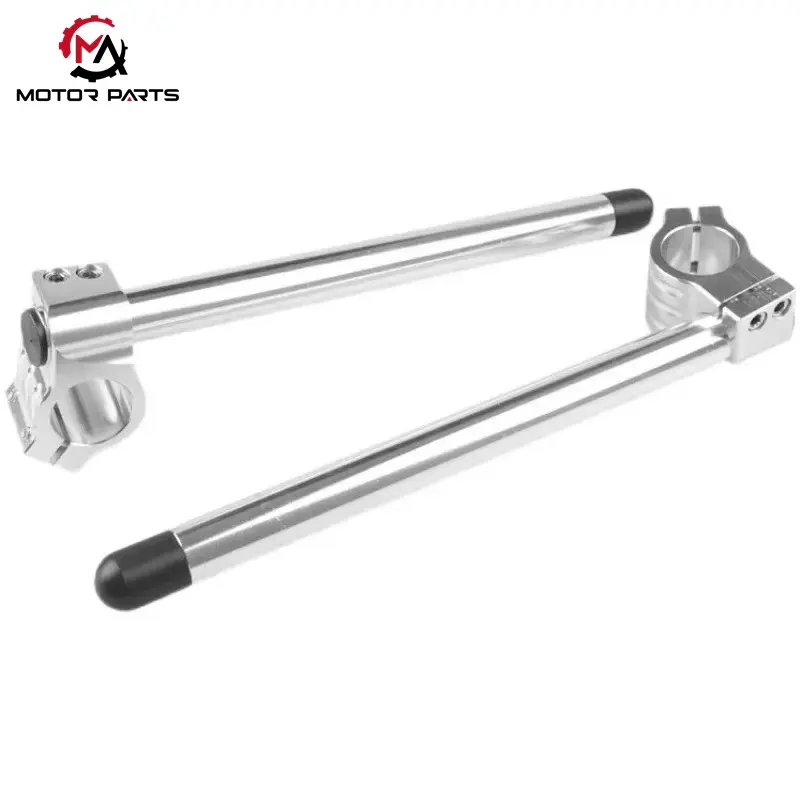
Max Trading offers Motorcycle CNC Modified Separate Clip On Handlebars designed for riders who want a more purposeful riding position, precise fitment, and a distinctive motorcycle appearance. Featuring CNC aluminum alloy construction, an independent split design, multiple front fork clamping sizes, and a polished silver finish, these handlebars are worth considering for motorcycle modification projects that balance functionality, compatibility, and style.

Choosing aftermarket handlebars involves more than changing a motorcycle's appearance. Handlebar geometry, clamping diameter, material, installation position, and control clearance all influence the final result. This guide explains how separate clip-on handlebars work, what makes CNC-machined aluminum an attractive option, how to select the correct fork diameter, and which installation checks deserve attention. It also introduces the key specifications of Max Trading's product to help motorcycle enthusiasts, repair shops, distributors, and parts buyers make informed purchasing decisions.

Motorcycle CNC Modified Separate Clip On Handlebars

Table of Contents

  1. What Are Motorcycle CNC Modified Separate Clip On Handlebars?
  2. What Are the Main Benefits of a Separate Handlebar Design?
  3. How Do Material and Surface Finish Affect Performance?
  4. What Are the Product Specifications?
  5. How Do You Choose the Right Fork Diameter?
  6. How Should Clip-On Handlebars Be Installed?
  7. What Should Buyers Check Before Purchasing?
  8. Frequently Asked Questions
  9. Conclusion: Choosing the Right Handlebar Upgrade

What Are Motorcycle CNC Modified Separate Clip On Handlebars?

Motorcycle CNC Modified Separate Clip On Handlebars are aftermarket steering components designed with two independent handlebar sections rather than one continuous crossbar. Each section is clamped separately to a suitable front fork mounting position, creating a compact configuration commonly associated with sport-oriented motorcycle modifications.

CNC machining uses computer-controlled equipment to manufacture components to specified dimensions. For handlebar assemblies, accurate machining is particularly important because the clamping interface must fit the motorcycle's fork dimensions correctly and remain secure under normal riding loads.

Compared with a conventional one-piece handlebar, a separate clip-on arrangement provides more flexibility when positioning the left and right grips. Depending on the motorcycle and mounting design, riders may be able to adjust handlebar height and angle to achieve a preferred control position.

These handlebars can suit selected sport motorcycles, custom street builds, and café racer projects. However, compatibility depends on the individual motorcycle's fork diameter, available mounting space, steering geometry, and control layout rather than displacement or brand name alone.


What Are the Main Benefits of a Separate Handlebar Design?

1. Independent Construction for Practical Replacement

The split configuration allows the left and right handlebar sections to be installed independently. If one section is damaged, it may be possible to replace that section rather than the entire handlebar assembly, provided compatible replacement parts are available and the mounting hardware remains serviceable.

This arrangement can simplify certain maintenance tasks and give modification workshops more flexibility when servicing individual components. Nevertheless, a crash can also damage the fork, clamps, steering components, or other controls, so the whole mounting area should be inspected after an impact.

2. More Flexible Riding Position

Riding posture affects wrist loading, shoulder position, steering response, and overall comfort. Separate clip-on handlebars can offer positioning flexibility for riders seeking a sportier appearance or a more tailored grip location.

The ideal setup depends on the rider's body proportions and intended use. A low, forward-leaning position may work well for some sport-oriented applications but can create additional wrist or back strain during everyday commuting. Test the intended position before finalizing the installation.

3. Precise Fitment and Secure Clamping

Accurate dimensions help the clamp fit the intended fork tube without improvised modifications. The correct diameter, proper contact surfaces, and suitable fastener torque are essential to maintaining a stable connection.

Do not assume that a handlebar is compatible simply because its advertised diameter appears close to the measured fork size. Consult the motorcycle service manual and confirm the supplier's dimensions before ordering.

4. A Distinctive Modified Appearance

The separate arrangement creates a clean, mechanical appearance that complements many customized motorcycles. Max Trading's model features a polished silver finish, making it suitable for builds where a bright metallic detail works with the tank, fork assembly, or other accessories.

Appearance should remain secondary to structural integrity, fitment accuracy, and safe control operation. A visually appealing component is only a successful upgrade when it performs correctly on the intended motorcycle.


How Do Material and Surface Finish Affect Performance?

Material selection influences weight, stiffness, machining characteristics, and resistance to environmental exposure. Max Trading specifies CNC aluminum alloy for this handlebar model, combining a machined component design with a metallic finish.

  • Lightweight construction: Aluminum alloy can offer a useful balance between low mass and structural performance when properly engineered.
  • Dimensional accuracy: CNC machining supports the production of defined clamping interfaces and consistent component geometry.
  • Surface appearance: The polished silver finish provides a bright metallic look for customized motorcycle builds.
  • Corrosion considerations: Surface condition, protective treatment, maintenance, and exposure to moisture all influence long-term appearance.
  • Inspection requirements: Scratches, cracks, deformation, damaged threads, and clamp wear should be checked before installation and during maintenance.

It is important to distinguish material choice from verified mechanical performance. CNC manufacturing alone does not establish a component's load rating, fatigue life, or crash resistance. Buyers should request applicable test information and material documentation when these details are necessary for their application.


What Are the Product Specifications?

The following table summarizes the published specifications for Max Trading's Motorcycle CNC Modified Separate Clip On Handlebars. Buyers should confirm the exact version and dimensions with the supplier before placing a bulk order.

Specification Published Details
Product name Motorcycle CNC Modified Separate Clip On Handlebars
Material CNC aluminum alloy
Handlebar tube outer diameter 22 mm
Single handle length 303 mm in the product parameter table
Front fork clamping diameter range 31–51 mm, subject to the available size options
Listed clamping sizes 31, 32, 33, 35, 36, 37, 39, 41, 45, 48, 50, and 51 mm
Product configuration One left handle and one right handle
Mounting method Split clamp with locking fasteners
Surface appearance Polished silver

Specification note: The product description also mentions a handle length of 28.5 cm, while the parameter table lists 303 mm as the total length of a single handle. Because these figures differ, confirm the applicable measurement and product version with Max Trading before purchasing.

For additional product details, review the Motorcycle CNC Modified Separate Clip On Handlebars product page.


How Do You Choose the Right Fork Diameter?

Correct sizing is one of the most important steps when selecting aftermarket clip-on handlebars. The advertised 31–51 mm range refers to available front fork clamping diameters, not a guarantee that every motorcycle within that range can accept the product without additional checks.

Use the following process to verify compatibility:

  1. Identify your motorcycle: Record the make, model, model year, and relevant variant.
  2. Confirm the fork diameter: Consult the service manual or obtain an accurate measurement at the specified clamping location.
  3. Check the mounting position: Verify the available space on the fork tube and confirm that the clamp does not interfere with the upper triple clamp or other components.
  4. Check the grip diameter: Confirm that the 22 mm handlebar tube matches the intended grips, throttle assembly, and switchgear.
  5. Review cable and hose routing: Ensure that the throttle, clutch, brake hoses, and electrical wiring remain free of tension or interference throughout the steering range.
  6. Confirm model-specific suitability: Ask the supplier to verify the application if the motorcycle has unusual fork geometry or modified controls.

Max Trading lists compatibility across selected motorcycles from manufacturers including Honda, Yamaha, Kawasaki, Suzuki, Ducati, and Triumph, as well as several Chinese motorcycle brands. This should be treated as a starting point for fitment verification, not a universal fitment guarantee.


How Should Clip-On Handlebars Be Installed?

Installation affects steering control and therefore requires careful attention. If you are unfamiliar with motorcycle steering assemblies, have a qualified motorcycle technician complete the work.

Recommended Installation Checklist

  1. Prepare the motorcycle. Switch off the engine, secure the motorcycle on a stable stand, and follow the manufacturer's workshop safety procedures.
  2. Remove the original components. Carefully remove the existing handlebars and associated controls as required. Keep reusable fasteners organized.
  3. Verify the clamp size. Confirm the selected clamping diameter and inspect the fork surface and clamp contact area for damage or contamination.
  4. Position both handlebar sections. Align the left and right sections symmetrically where appropriate, following the motorcycle's service requirements and the intended riding position.
  5. Secure the fasteners. Tighten all bolts using the manufacturer's specified torque values and tightening sequence. Do not guess the torque or overtighten the clamps.
  6. Reinstall the controls. Fit the grips, throttle, clutch controls, switches, and brake components as applicable. Check that all controls operate smoothly.
  7. Inspect full steering movement. Turn the handlebar fully to both sides and check for cable tension, hose pinching, bodywork contact, or interference.
  8. Complete a safety inspection. Verify fastener security, throttle return, brake operation, and steering freedom before considering any test ride.

Never ride a motorcycle if the handlebar assembly moves unexpectedly, the throttle fails to return freely, the brake hose is stretched, or steering movement is restricted. Any initial low-speed test should take place only after a competent inspection confirms that the installation is safe.


What Should Buyers Check Before Purchasing?

For individual riders, repair shops, motorcycle modification businesses, and distributors, the best purchasing decision starts with a clear understanding of the intended application.

Buying Factor What to Verify Why It Matters
Fork diameter Exact clamp size and measurement location Helps prevent incorrect fitment
Handlebar dimensions Tube diameter, usable length, and grip area Supports control and accessory compatibility
Material Aluminum alloy specification and available documentation Helps assess suitability for the intended use
Finish Polished surface condition and maintenance requirements Supports appearance and service life expectations
Installation Fastener requirements and motorcycle-specific clearance Helps maintain safe steering and control operation
Bulk purchasing Size availability, packaging, lead time, and order quantity Helps plan inventory and purchasing costs

Before ordering, buyers should also clarify warranty terms, inspection procedures, replacement-part availability, and shipping arrangements. For distributors serving several motorcycle markets, a confirmed size list can help reduce fitment errors and unnecessary returns.

Businesses evaluating additional products can explore Max Trading's motorcycle control parts to review related components for motorcycle modification and maintenance.


Frequently Asked Questions

1. What are Motorcycle CNC Modified Separate Clip On Handlebars used for?

They are aftermarket motorcycle handlebars designed for separate left and right mounting. Riders commonly consider this configuration for sport-oriented modifications, custom builds, and a more tailored handlebar position. Suitability depends on the motorcycle's mounting geometry and intended use.

2. What material does Max Trading use for this product?

The published product specifications identify CNC aluminum alloy as the material. Buyers requiring a particular alloy grade, mechanical properties, or supporting material documentation should confirm availability directly with the supplier.

3. Which front fork diameters are available?

The published range is 31–51 mm, with listed options of 31, 32, 33, 35, 36, 37, 39, 41, 45, 48, 50, and 51 mm. Confirm the exact size in stock and verify the required measurement location before ordering.

4. Are these handlebars compatible with every motorcycle?

No. A matching fork diameter alone does not establish complete compatibility. Buyers must also check mounting clearance, handlebar position, grip diameter, control placement, cable routing, and the motorcycle manufacturer's requirements.

5. Can separate clip-on handlebars reduce repair costs after a fall?

They may allow an individual damaged handlebar section to be replaced without replacing the complete pair, depending on the damage and parts availability. However, a fall can also damage the fork, clamp, steering assembly, or controls, all of which require inspection before the motorcycle returns to service.

6. How do I maintain the polished silver finish?

Clean the surface with a suitable non-abrasive cleaner and a soft cloth. Avoid harsh chemicals and abrasive tools that may damage the finish. Inspect the handlebar and clamps periodically for corrosion, cracks, deformation, or other signs of damage.

7. What should I confirm before placing a wholesale order?

Confirm the required fork diameters, handlebar dimensions, material details, surface finish, order quantity, packaging, delivery schedule, and quality documentation. If the product is intended for a particular motorcycle model, provide the make, model, and model year so fitment can be reviewed.


Conclusion: Choosing the Right Handlebar Upgrade

Motorcycle CNC Modified Separate Clip On Handlebars can be a practical option for riders and modification businesses seeking a separate mounting arrangement, CNC aluminum alloy construction, a polished metallic appearance, and multiple fork diameter choices. The most important purchasing considerations remain accurate sizing, verified motorcycle compatibility, suitable riding ergonomics, and correct installation.

Max Trading provides a product option for buyers comparing motorcycle modification components for individual projects or commercial sourcing. Review the specifications carefully, confirm any dimensional discrepancies before ordering, and prioritize professional installation and safety checks over appearance alone.

Ready to source Motorcycle CNC Modified Separate Clip On Handlebars for your next modification project or wholesale order? Visit the Max Trading product page to review the available specifications, discuss your motorcycle's fitment requirements, and contact us for product details, size confirmation, and purchasing assistance. Choose the right fit to build a motorcycle setup that combines purposeful design with dependable control.

Related News
Leave me a message
X
We use cookies to offer you a better browsing experience, analyze site traffic and personalize content. By using this site, you agree to our use of cookies. Privacy Policy
RejectAccept