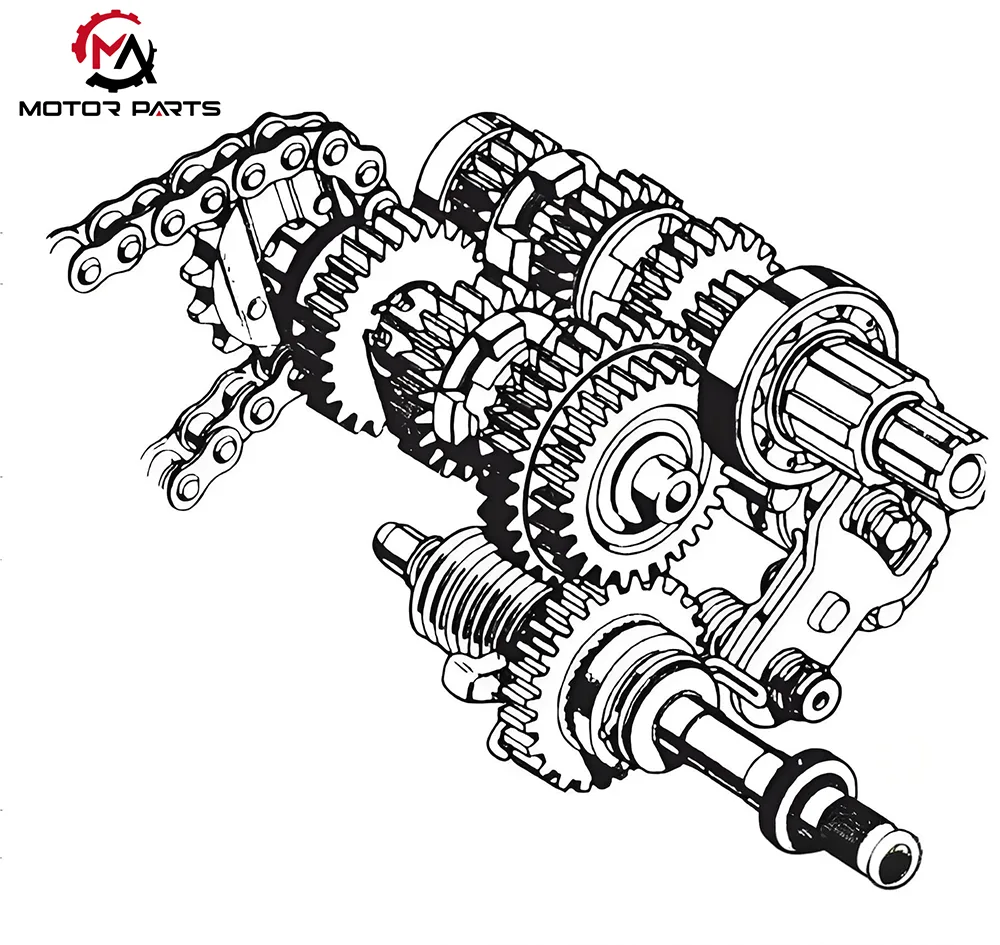
Motorcycle transmission parts mainly consists of the following parts: motorcycle clutch assembly, motorcycle transmission accessories, motorcycle chain and sprocket, motorcycle belt drive accessories, motorcycle shaft transmission accessories. Max Trading will analyze the motorcycle transmission system from these aspects.
Motorcycle clutch assembly
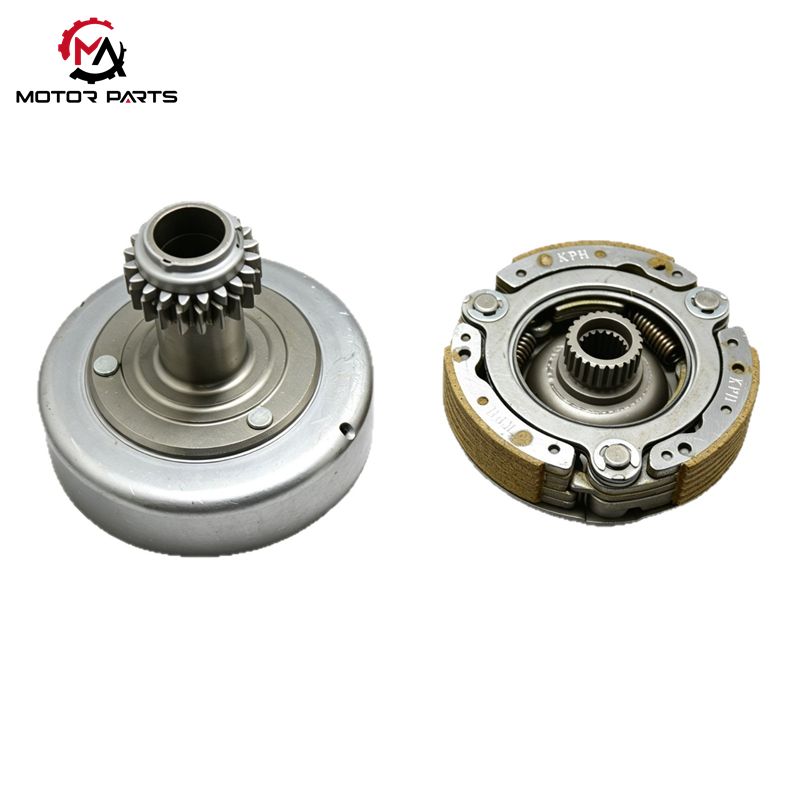
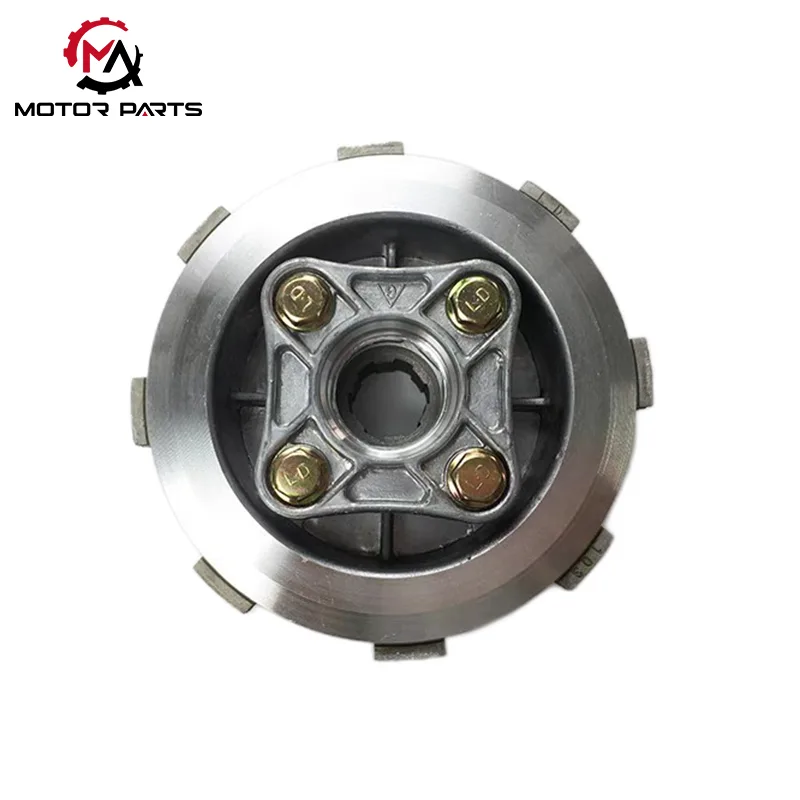
The motorcycle clutch, as the core hub of the transmission system, has three core functions: firstly, it achieves smooth starting, and through gradual engagement, gently transmits engine power to the transmission and wheels, effectively avoiding starting jolts; Secondly, it assists in precise gear shifting by instantly cutting off power transmission when shifting gears, preventing severe gear collisions and significantly extending the service life of gears; Thirdly, it provides overload protection. When encountering sudden resistance, the clutch actively slips and releases force, fully safeguarding the safety of the engine and transmission components.
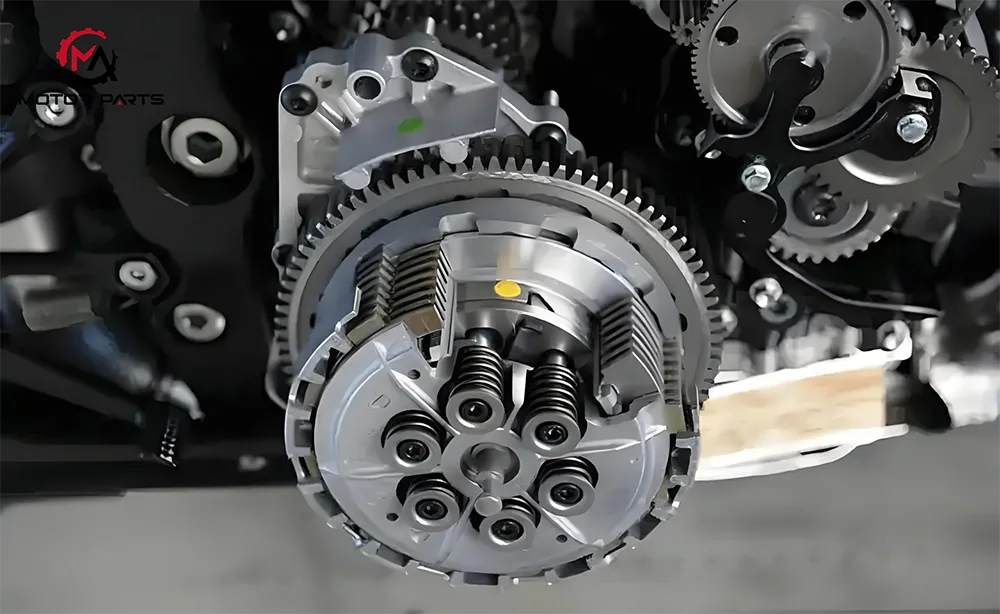
The operation of the clutch is based on the clutch mechanism of the active and passive components: the active end is rigidly connected to the engine crankshaft, and the passive end is connected to the transmission input shaft. When the rider squeezes the clutch handle, the main and driven components come out of contact, the frictional force disappears, and the power transmission is interrupted; After releasing the handle, the spring force drives the two to tightly fit, achieving efficient power transmission through friction.
From the perspective of structural types, mainstream clutches are divided into wet multi plate clutches and dry clutches. The former is immersed in engine oil and has excellent heat dissipation performance and high load bearing capacity, suitable for high load conditions such as high-speed cruising and heavy-duty transportation; The latter adopts a dry structure, and with its simple design and convenient maintenance advantages, it has become an ideal choice for light-duty vehicle models.
Motorcycle transmission accessories
The core value of motorcycle transmissions lies in intelligent regulation of power output, which enables the vehicle to maintain optimal power matching under various road conditions and load conditions by flexibly changing the transmission ratio. When driving at high speeds, the transmission converts the high engine speed into efficient output from the wheels; In the face of climbing, heavy loads and other scenarios, it automatically reduces the speed and amplifies the torque to ensure sufficient power.
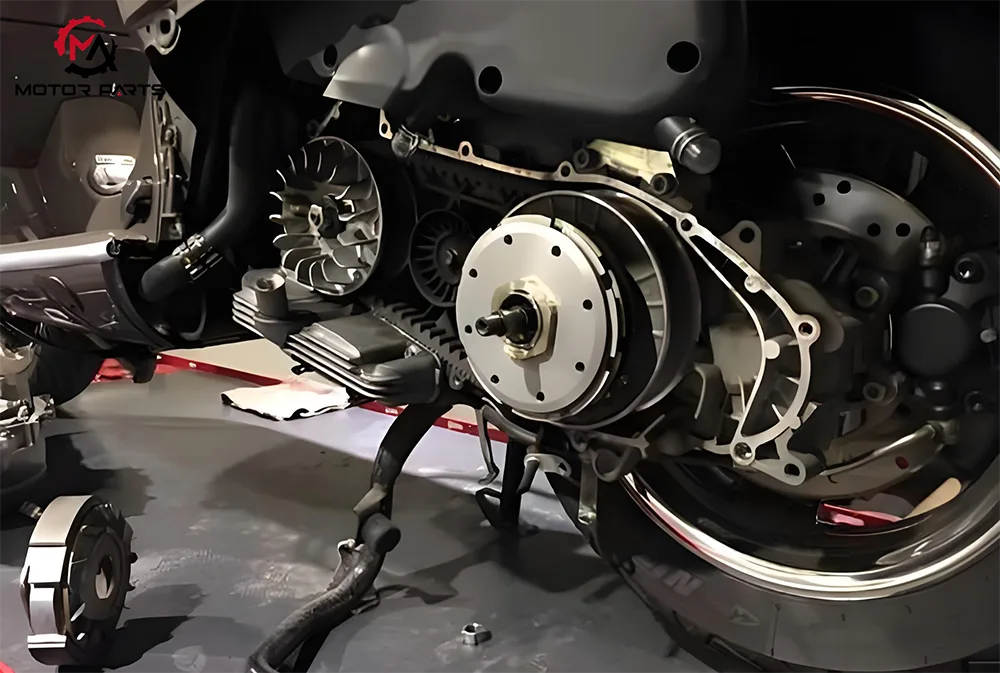
According to the control mode, transmissions can be divided into two types: manual and automatic. The manual transmission relies on the rider's precise control of the shift lever, achieving gear switching by changing the gear meshing relationship, giving the driver a deep sense of participation and control freedom; Automatic transmissions integrate hydraulic or electronic control systems to monitor engine speed, vehicle speed, and other parameters in real time. They can complete intelligent gear shifts without manual intervention, especially suitable for urban commuting scenarios, greatly reducing driving burden.
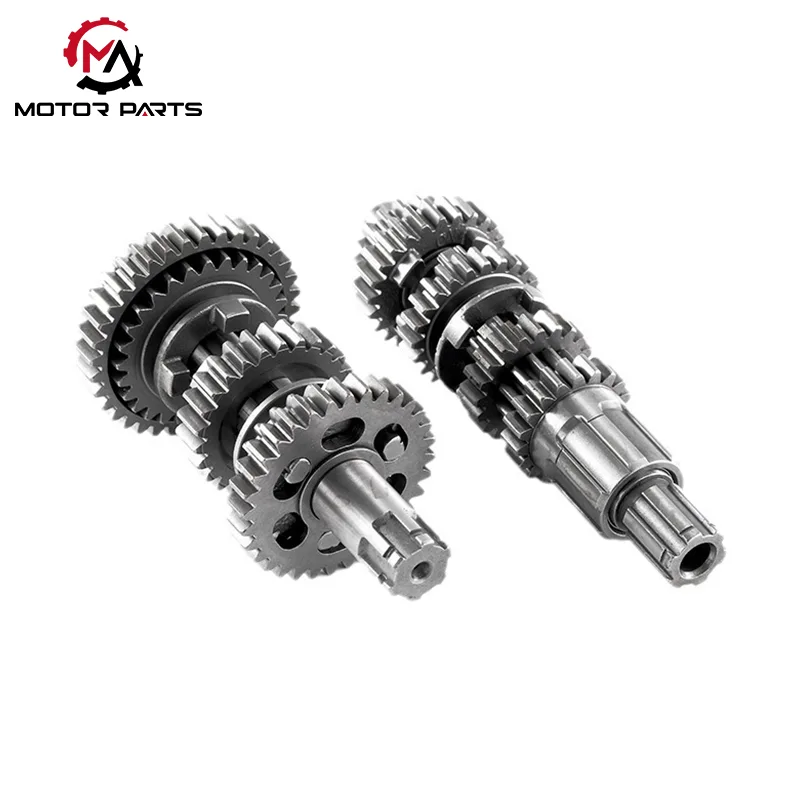
Its working mechanism is based on the dynamic adjustment of gear transmission ratio, which precisely controls the speed ratio between the input shaft and the output shaft through the combination meshing of gears with different numbers of teeth, thereby achieving the adjustment of power output.
Motorcycle chains and sprockets
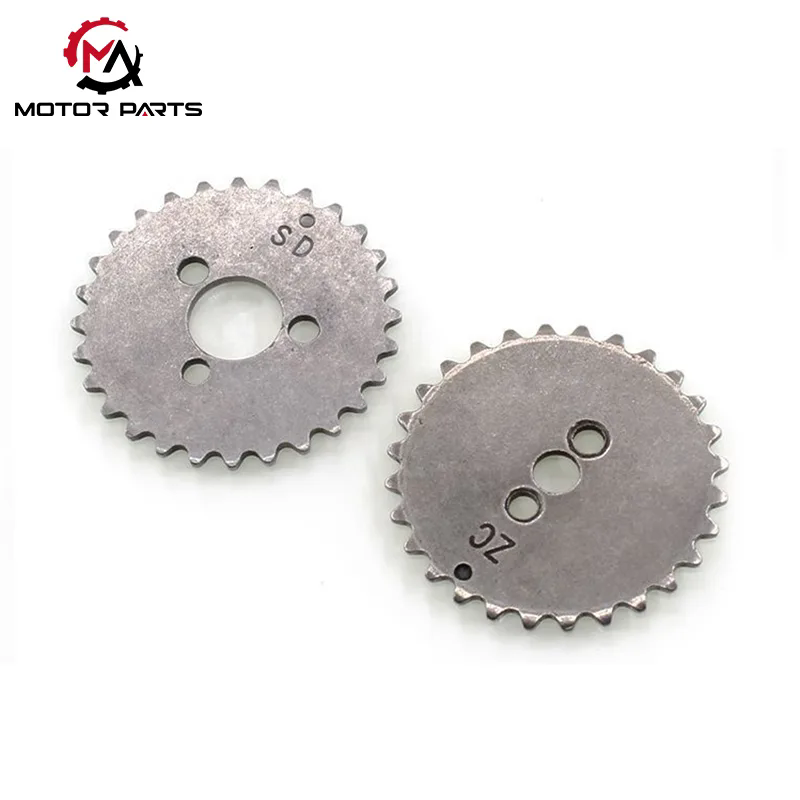
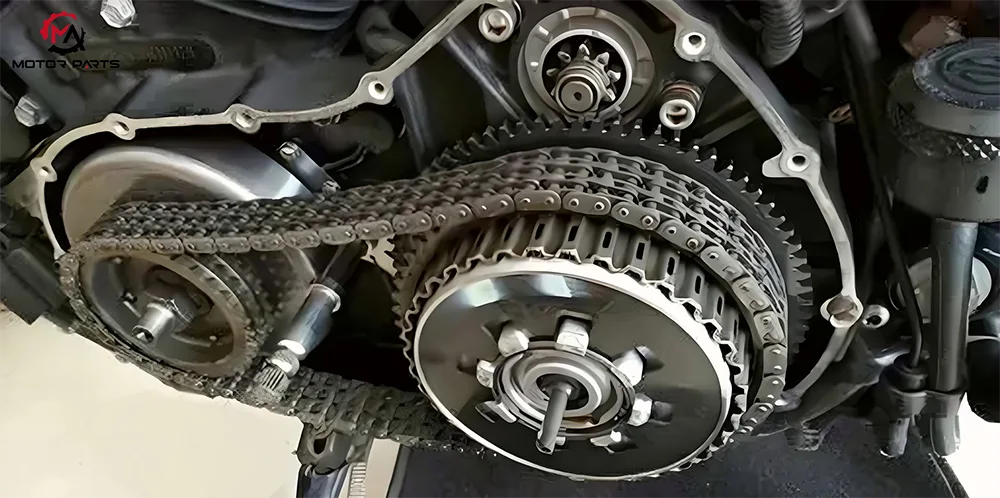
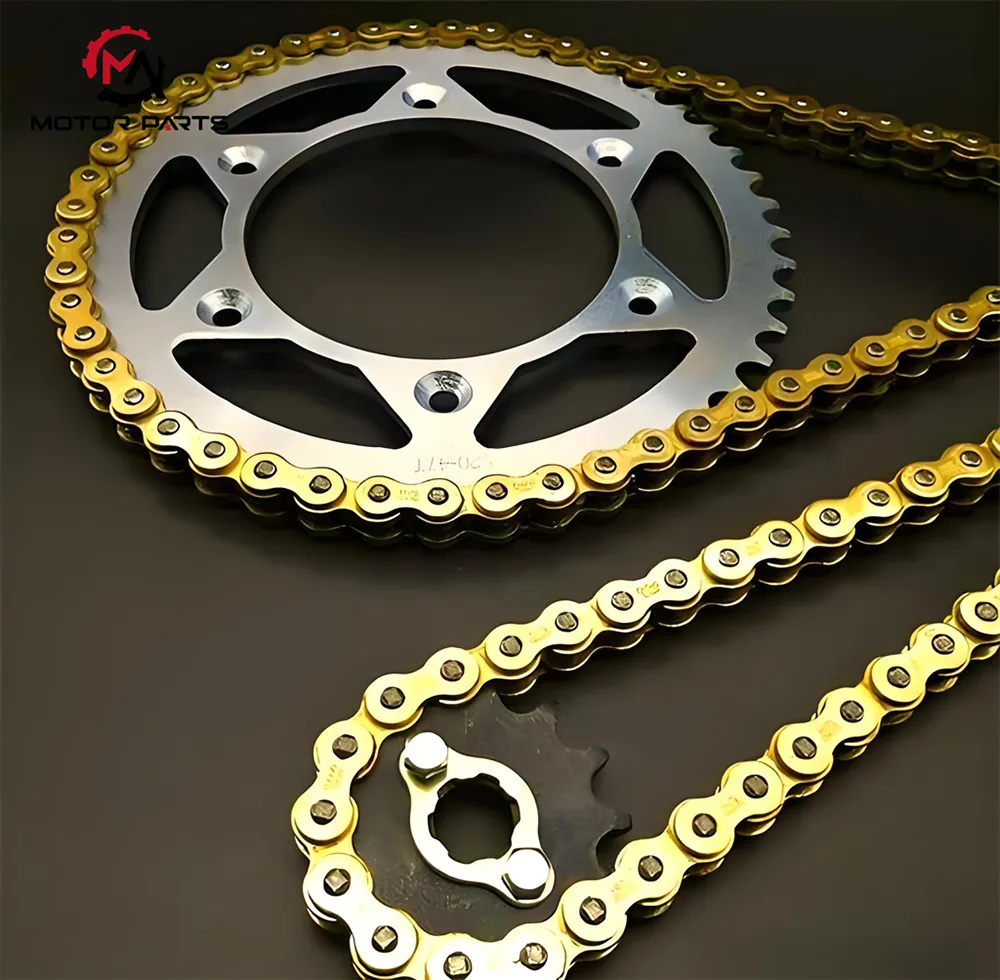
Chain and sprocket transmission systems have become the solution for motorcycle power transmission due to their simple structure and efficient transmission design. Its working principle is based on the gear chain meshing mechanism: the engine drives the driving sprocket to rotate through the clutch and gearbox, and the chain circulates under the traction of the sprocket teeth, thereby driving the driven sprocket of the rear wheel to rotate and ultimately driving the vehicle forward.
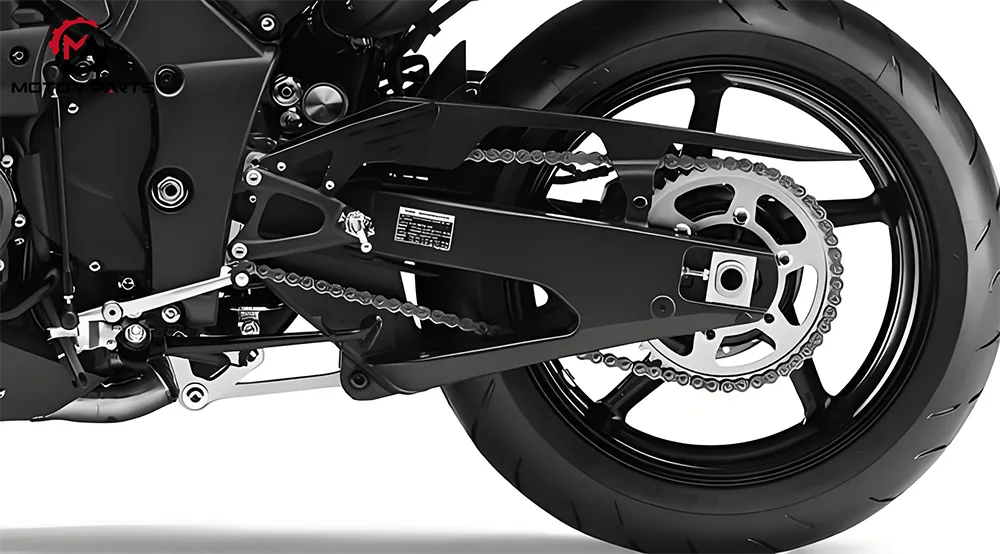
This transmission method is known for its simple structure, cost-effectiveness, and efficient transmission, but its mechanical contact characteristics make it require high regular maintenance. Timely lubrication and maintenance are necessary to effectively reduce wear and ensure the stability and durability of power transmission. Therefore, chain and sprocket transmission are widely used in various types of motorcycles.
Motorcycle belt transmission accessories
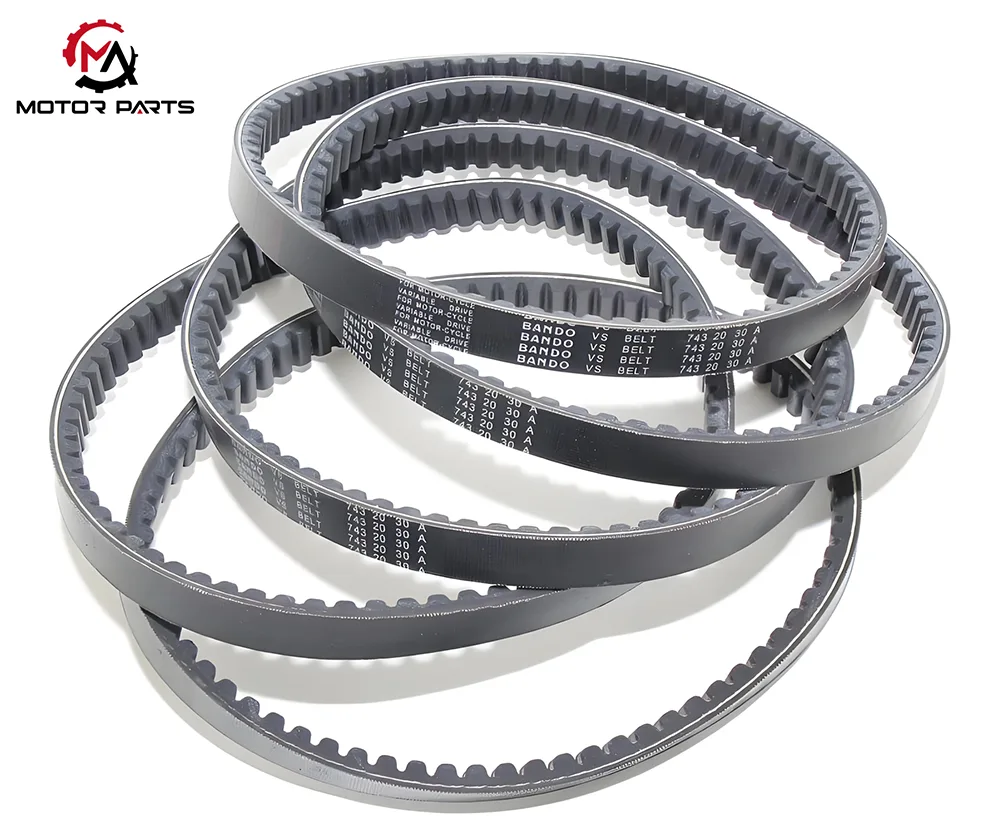
The belt drive setup is made up of a belt and some wheels called pulleys, and it sends power around using friction. The engine makes the driving wheel spin, and with friction's help, it makes the belt move. The belt then makes the other wheel, called the driven wheel, spin too, and that finally sends the power to the back wheel.
This way of sending power has some big perks—it's quiet and easy to take care of. Its design, which doesn't use rigid contact, gives it really good shock absorption. That cuts down on driving noise and makes the ride more comfy. Plus, it doesn't need oiling all the time, which makes taking care of it a lot simpler. But, belt drives do have some downsides, like they lose a bit more power and can wear out faster because of things like the weather, so you gotta check and replace them regularly. This kind of setup works really well for touring motorcycles that focus more on being comfy and don't require much maintenance.
Motorcycle shaft transmission accessories
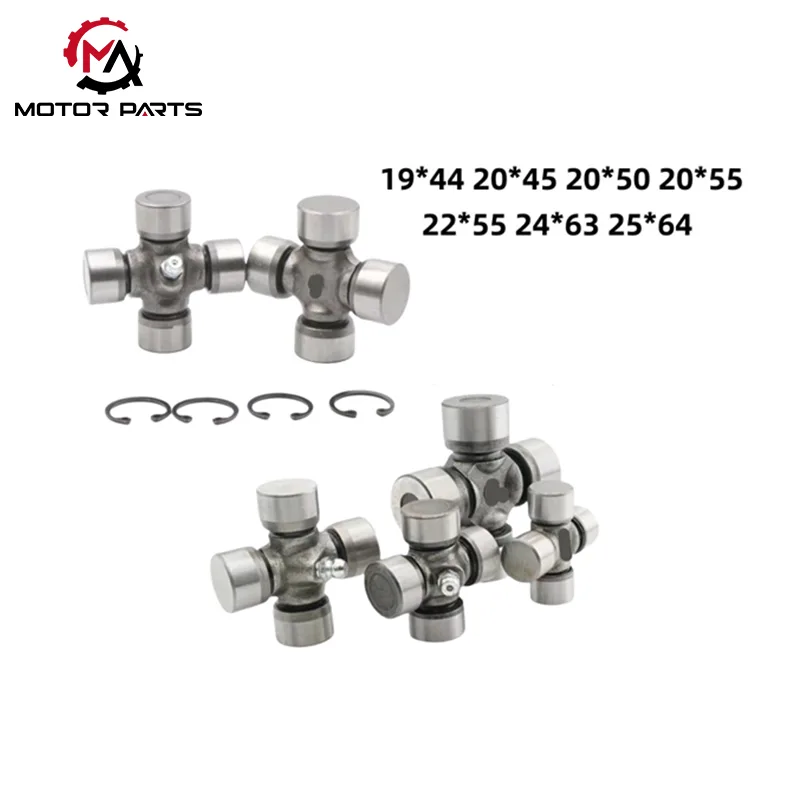
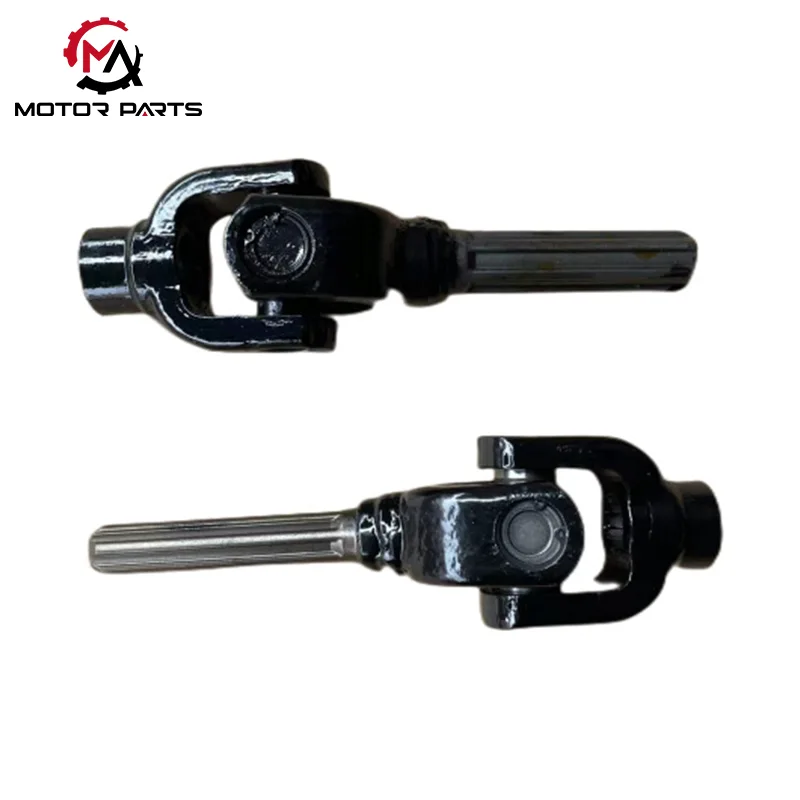
The shaft transmission system consists of core components such as transmission shaft and gear set, and adopts gear meshing transmission to stably transmit engine power to the rear wheels. The power is transmitted to the driving gear through the clutch and transmission, and the transmission shaft is driven to rotate through gear meshing. Then, the power is transmitted to the rear wheels through the other end gear, achieving vehicle driving.
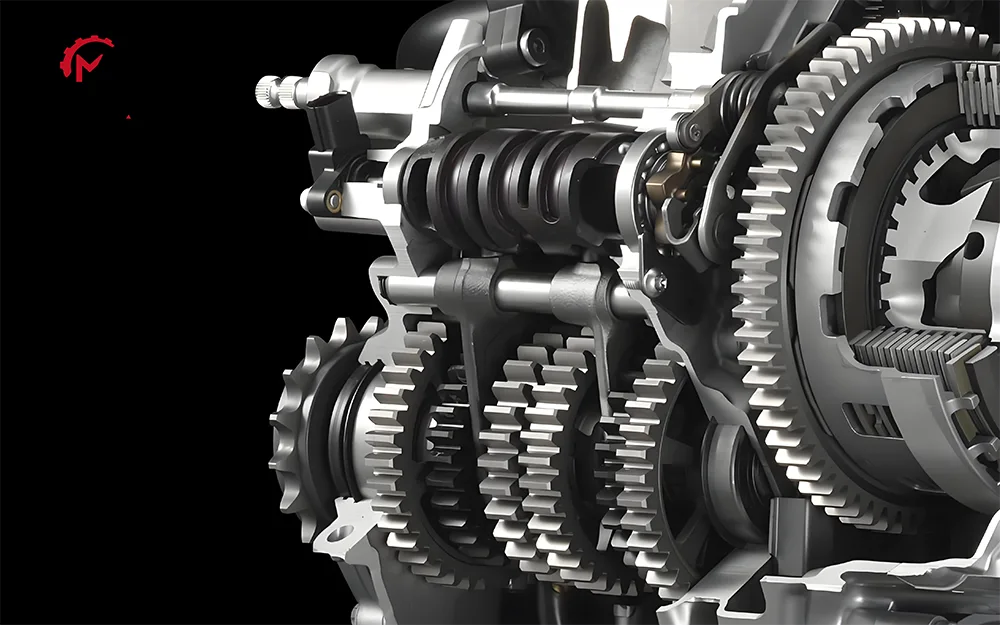
Shaft transmission is renowned for its high efficiency, stability, and long-term maintenance. Shaft transmission is renowned for its high efficiency, stability, and long-term maintenance. The solid link and gear setup really cut down on power waste, and the tough build makes sure it can handle a lot of torque; Plus, not needing to oil it all the time means less maintenance. But because it's built so complicatedly and costs a lot to make, it's mostly used in fancy models like big, heavy cruise cars and long-distance travel cars.
Max Trading has been deeply involved in the motorcycle parts industry for many years, accumulating valuable industry experience and committed to building a diversified product line. We always uphold a rigorous and responsible attitude, carefully screening and rigorously evaluating every product. We not only value the practicality and quality of the product itself, but also take into account other customer needs besides product price, such as logistics and transportation, after-sales service, etc.
We firmly believe that providing customer service is not simply a commercial transaction, but rather a process of long-term companionship and caring for customers. Therefore, we strive to provide every customer with a comprehensive "one-stop" service: from pre-sales product consultation and recommendation, to in sales order tracking and logistics coordination, to after-sales maintenance support and problem solving. Our team will follow up throughout the process to ensure that customers can feel our sincerity and responsibility throughout the entire purchase and use process.