Max Trading handles full range of motorcycle belt drive accessories supply in China with very good price and fast shipment. Motorcycle belt transmission components mainly include motorcycle transmission belts, pulleys, etc. We're gonna introduce these parts in terms of what they're made of, how they're built, what they do, and what makes them special.
1. Motorcycle Transmission Belt
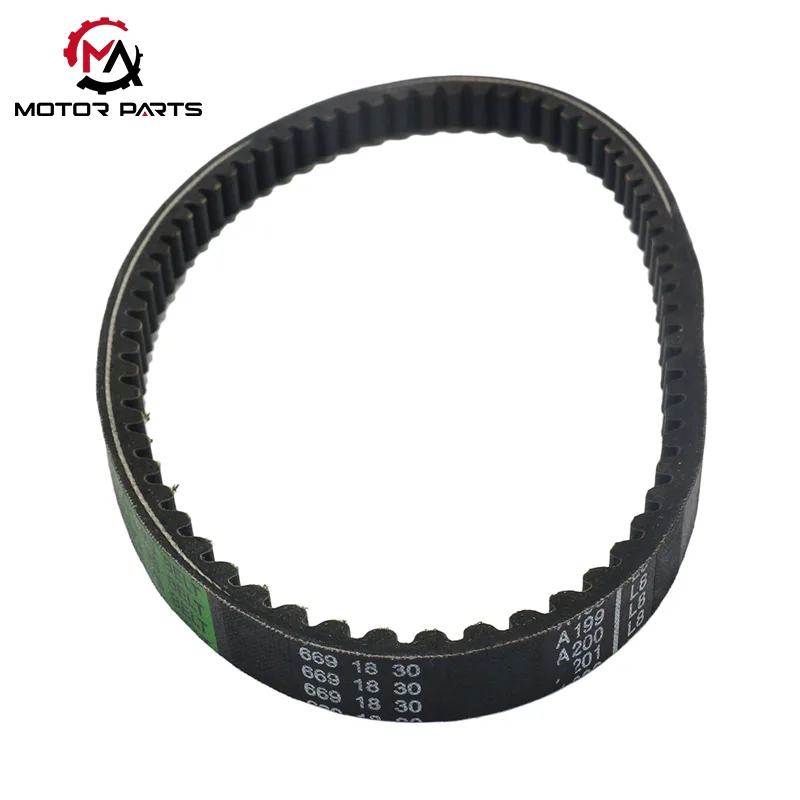
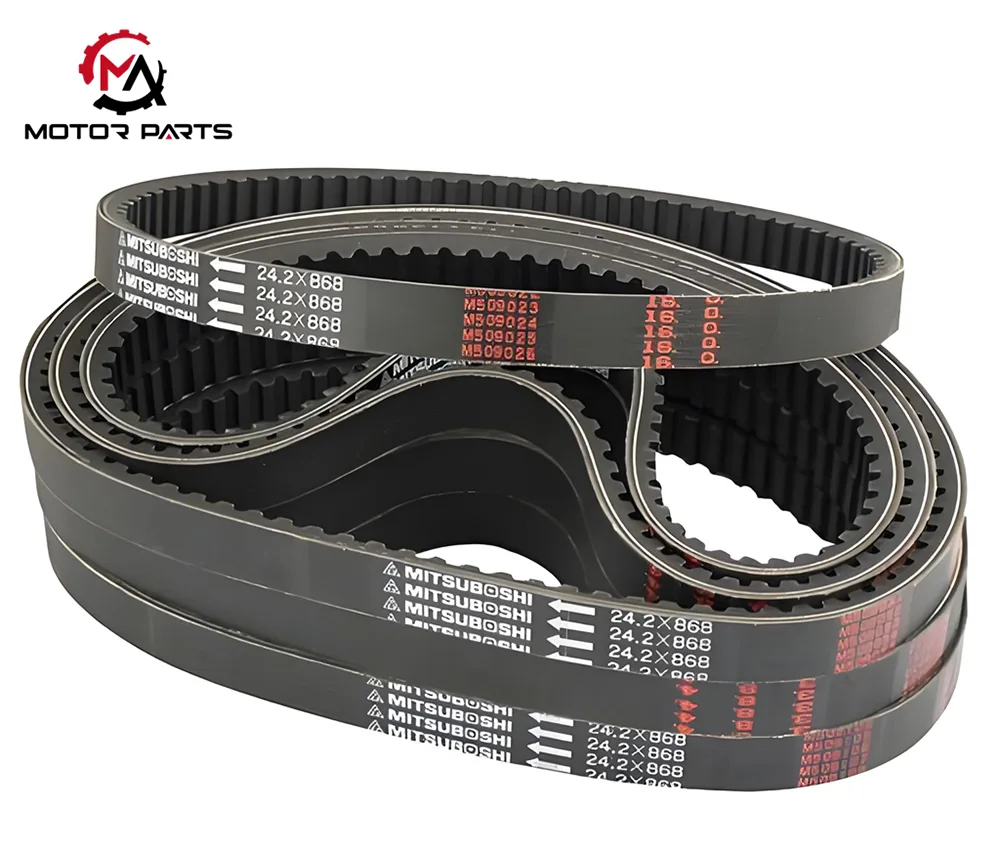
As the power transmission component of the belt transmission system, the material and structural design of the motorcycle transmission belt affect the transmission efficiency and service life. The common transmission belts on the market are mostly made of chloroprene rubber as the main raw material, with multiple layers of high-strength polyester rope or aramid fiber embedded inside as a reinforcing skeleton. This composite structure combines the high elasticity and wear resistance of rubber, while greatly improving the tensile performance of the belt with the help of a fiber skeleton, which can cope with high-frequency tensile impacts during transmission.
Drive belts generally have a toothed design. The teeth on the belt can tightly fit into the grooves of the pulley, so as not to slip, and the power transmission efficiency can reach over 95%. Compared to chain transmission, the belt has some elasticity, which can buffer the impact during power transmission and greatly reduce noise. So, the transmission belt is very suitable for vehicles such as station wagons and scooters that require high levels of driving quietness and comfort. In addition, the transmission belt does not require frequent lubrication or maintenance, which can save a lot of maintenance money.
2. Motorcycle belt pulley
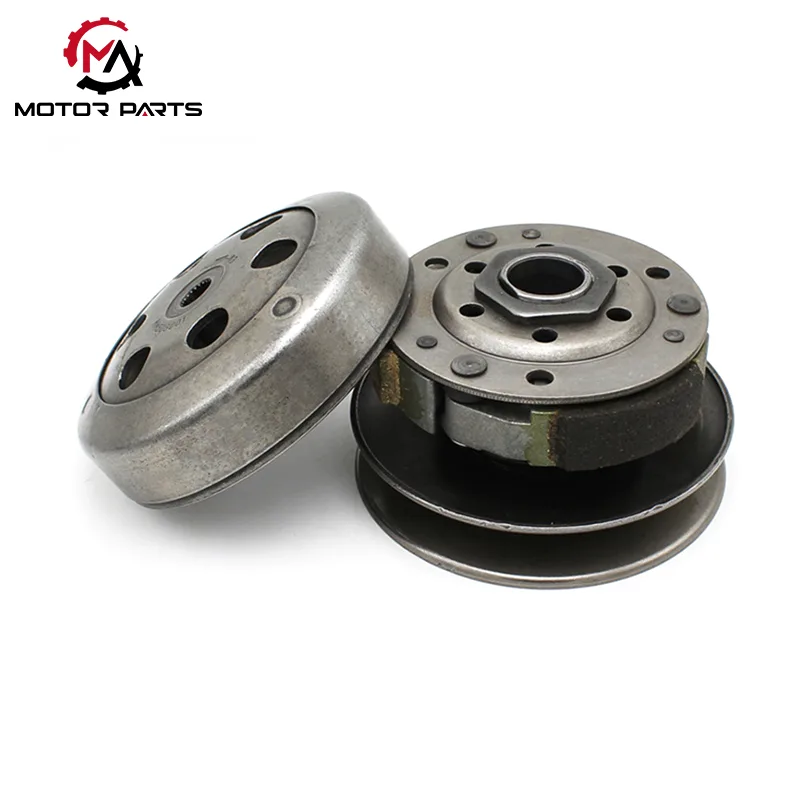
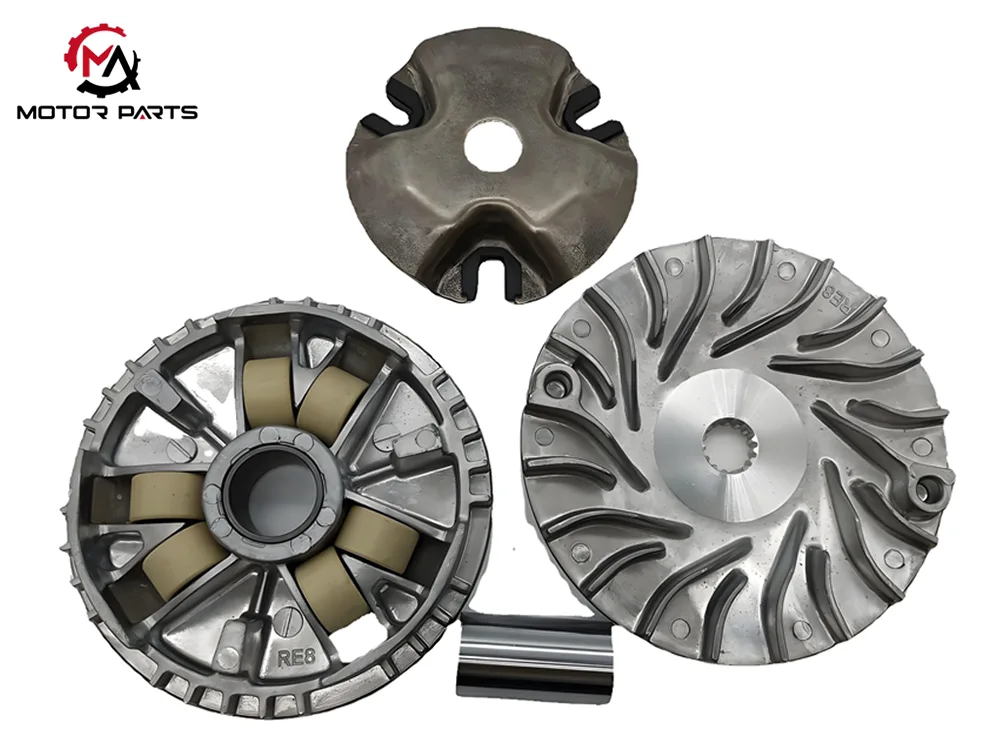
The motorcycle pulley system has two parts: the drive pulley and the driven pulley. They team up to send power and change speeds. The drive pulley goes on the engine's output shaft, and the driven pulley hooks up to the back wheel. The driving wheel is installed on the engine output shaft, while the driven wheel is connected to the rear wheel. The material of the pulley is mainly aluminum alloy or cast iron, among which the aluminum alloy wheel body can effectively reduce inertial resistance and improve power response speed due to its lighter weight.
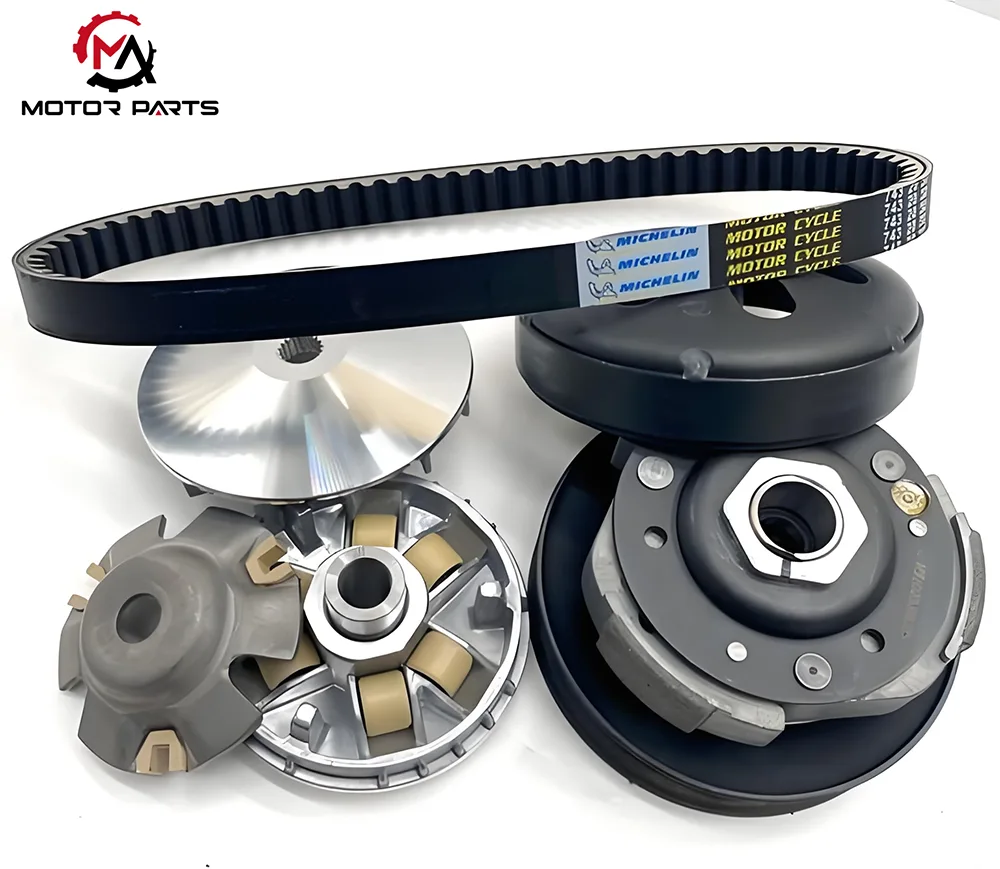
One big tech cool thing about pulleys is the design where the diameter can change (you often see this in continuously variable transmission setups). It adjusts how big the pulley is while it's working by using centrifugal force or some mechanical controls to keep changing speeds smoothly. When the engine speeds up, the driving wheel automatically gets bigger, and the driven wheel gets smaller, and it's the opposite when the engine slows down. This setup lets the engine always run at a speed where it works well, balancing how much power it gives and how much gas it uses. Plus, the shape of the tooth grooves on the pulley's surface fits the teeth of the belt just right, making sure they connect perfectly and don't waste much power. Also, the edges of the tooth grooves are rounded off to cut down on how much the motorcycle belt wears out.
Max Trading undertakes small batch orders (multi category integrated shipping), collaborates with multiple factories for production, and can flexibly allocate emergency orders (stock up and ship in batches). By integrating customers' scattered orders and connecting them with partner factories, the minimum order quantity threshold for a single factory is lowered, helping customers reduce their total procurement costs by more than 20%.
In addition, Max Trading also supports a staggered delivery strategy: splitting large orders into multiple shipments to alleviate customer financial pressure and avoid demurrage risks. We always think from the customer's perspective, only to provide you with convenient and satisfactory services.