Motorcycle tires are the only components that touch with the ground, directly affecting riding safety, handling performance, comfort, and durability. Max trading achieves efficient mass production through standardized production lines, which can meet both OEM needs and replacement needs in the aftermarket. At the same time, Max Trading deeply integrates the supply chain and establishes long-term cooperation with rubber raw material suppliers, wire ring manufacturers, etc. to guarantee stable raw material quality (such as the purity of natural rubber and the wear resistance parameters of synthetic rubber). Good tires can effectively cushion road bumps, decrease vibrations during cycling, and allow riders to enjoy a more comfortable journey.
Motorcycle tire attributes cover multiple key aspects, which directly affect tire performance and applicable scenarios.
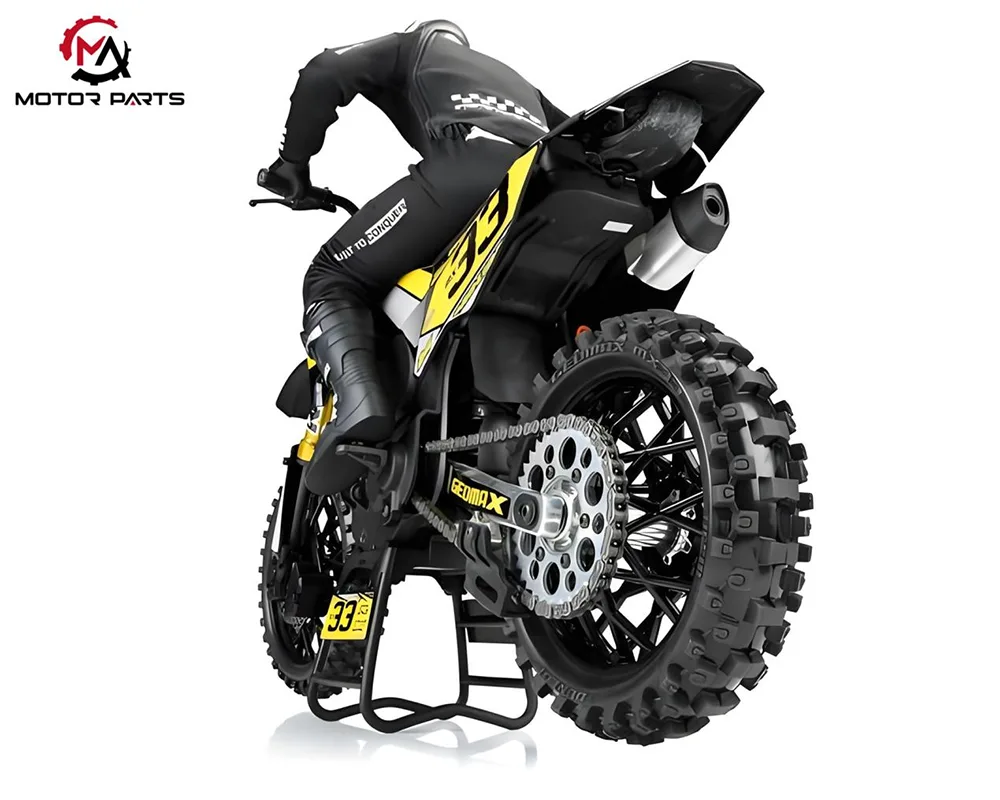
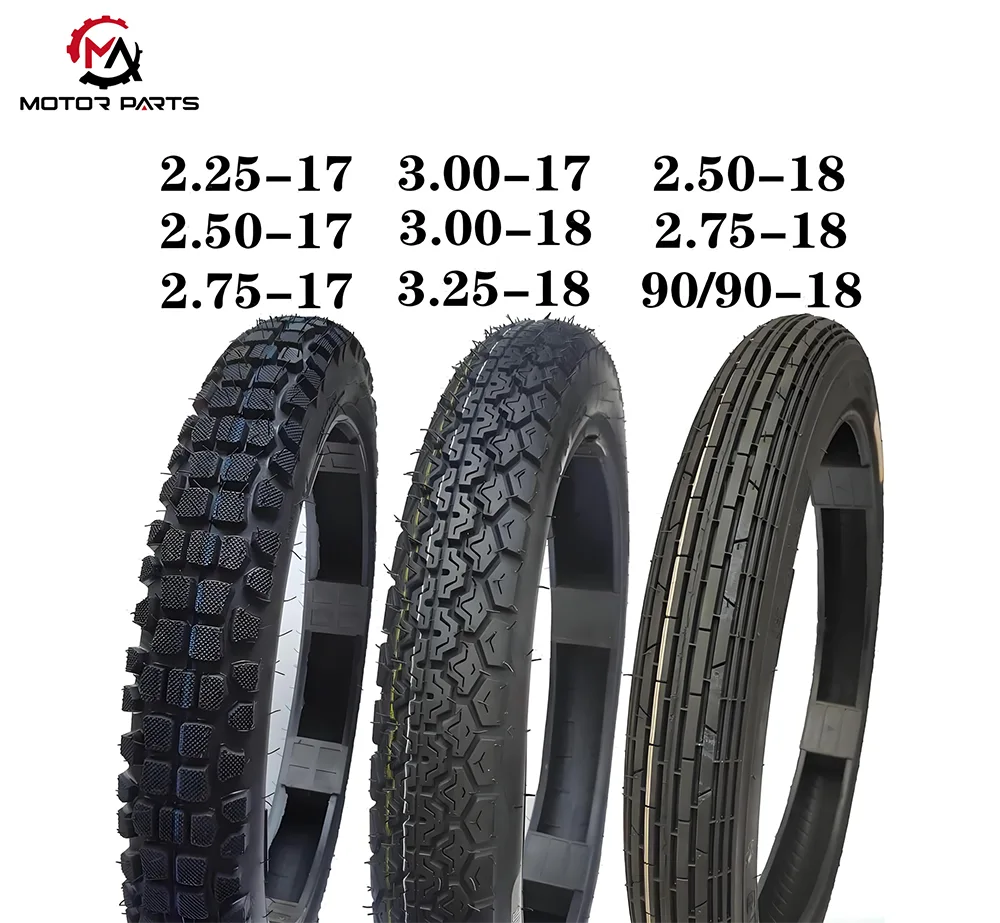
Size specifications
As the most fundamental attribute of motorcycle tires, their specifications are usually labeled in the form of "width/flatness ratio wheel hub diameter", such as the common 120/70-17. Among them, width refers to the width of the tire cross-section, which directly affects the tire's contact area and grip performance; Flatness ratio is the percentage of tire height to width. A low flatness ratio means that the tire wall is harder and can provide more nifty handling performance, while a high flatness ratio tends towards comfort; The diameter of the wheel hub must be precisely matched with the size of the motorcycle wheel hub to guarantee stable tire installation.
|
Model
|
Front wheel standard fit size
|
Rear wheel standard fit size
|
Detailed explanation of adaptation principles and advantages
|
|
Streetcar
|
110/70-17、120/70-17
|
150/60-17、160/60-17
|
The golden ratio of narrow front and wide back balances steering sensitivity and road grip, achieving a balance between maneuverability and practicality on urban roads.
|
|
Sports car
|
120/70-17
|
180/55-17、190/50-17
|
The rear wheels are designed with wide tires and low flatness ratio, providing excellent grip and stability for high-speed cornering, meeting track level performance requirements.
|
|
Cruiser
|
130/90-16、120/90-18
|
180/65-16、200/55-16
|
Widening the rear wheels to enhance load-bearing capacity, ensuring stability and comfort during long-distance driving, suitable for heavy-duty and long-distance straight driving scenarios.
|
|
ATV
|
80/100-21
|
110/100-18、120/90-18
|
The large-diameter front wheels improve terrain passability, while the wide rear wheels enhance grip on complex road conditions, adapting to extreme driving demands in off-road environments.
|
|
Scooter
|
120/70-12、110/70-13
|
130/70-12、140/60-13
|
The difference in size between the front and rear wheels is small, ensuring flexible handling and driving stability for urban commuting, which is suitable for daily short distance travel scenarios.
|
Speed level
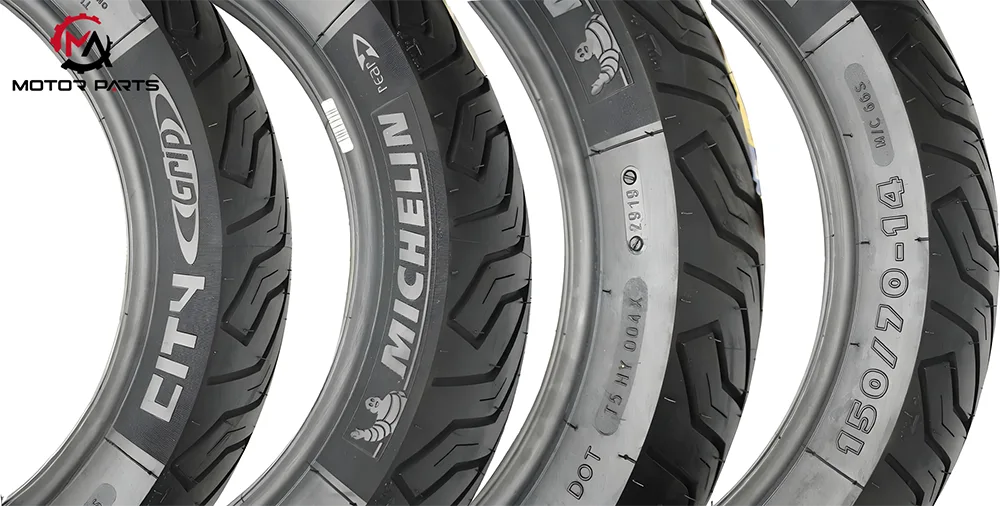
The speed level of motorcycle tires is recognized by letters, with each letter corresponding to a different maximum safe driving speed. For example, the letter "H" indicates a maximum allowable speed of 210km/h for the tire, while "V" represents 240km/h. When choosing tires, it is necessary to fully consider the design speed and actual usage scenarios of the motorcycle. Only by ensuring that the speed level of the tires matches the driving speed can safety risks caused by overloaded operation be effectively avoided.
|
Speed level identification
|
Maximum allowable driving speed (km/h)
|
|
J
|
100
|
|
K
|
110
|
|
L
|
120
|
|
M
|
130
|
|
N
|
140
|
|
P
|
150
|
|
Q
|
160
|
|
R
|
170
|
|
S
|
180
|
|
T
|
190
|
|
U
|
200
|
|
H
|
210
|
|
V
|
240
|
|
W
|
270
|
|
Y
|
300
|
|
ZR
|
Exceeding 240 (as specified by the tire manufacturer)
|
Load index
The load index is presented in numerical form, which intuitively reflects the maximum weight that motorcycle tires can withstand. For example, the maximum load capacity corresponding to a load index of 62 is 265kg. Whether carrying passengers or cargo, the total weight of the motorcycle during operation should not exceed the limit value of the tire load index, otherwise it may lead to excessive tire load, seriously affecting the service life and even causing safety accidents.
|
Load index
|
Maximum Load Capacity(kg)
|
Load index
|
Maximum Load Capacity(kg)
|
|
42
|
150
|
57
|
230
|
|
43
|
155
|
58
|
236
|
|
44
|
160
|
59
|
243
|
|
45
|
165
|
60
|
250
|
|
46
|
170
|
61
|
257
|
|
47
|
175
|
62
|
265
|
|
48
|
180
|
63
|
272
|
|
49
|
185
|
64
|
280
|
|
50
|
190
|
65
|
287
|
|
51
|
195
|
66
|
295
|
|
52
|
200
|
67
|
303
|
|
53
|
206
|
68
|
311
|
|
54
|
212
|
69
|
319
|
|
55
|
218
|
70
|
327
|
|
56
|
224
|
|
|
Pattern type
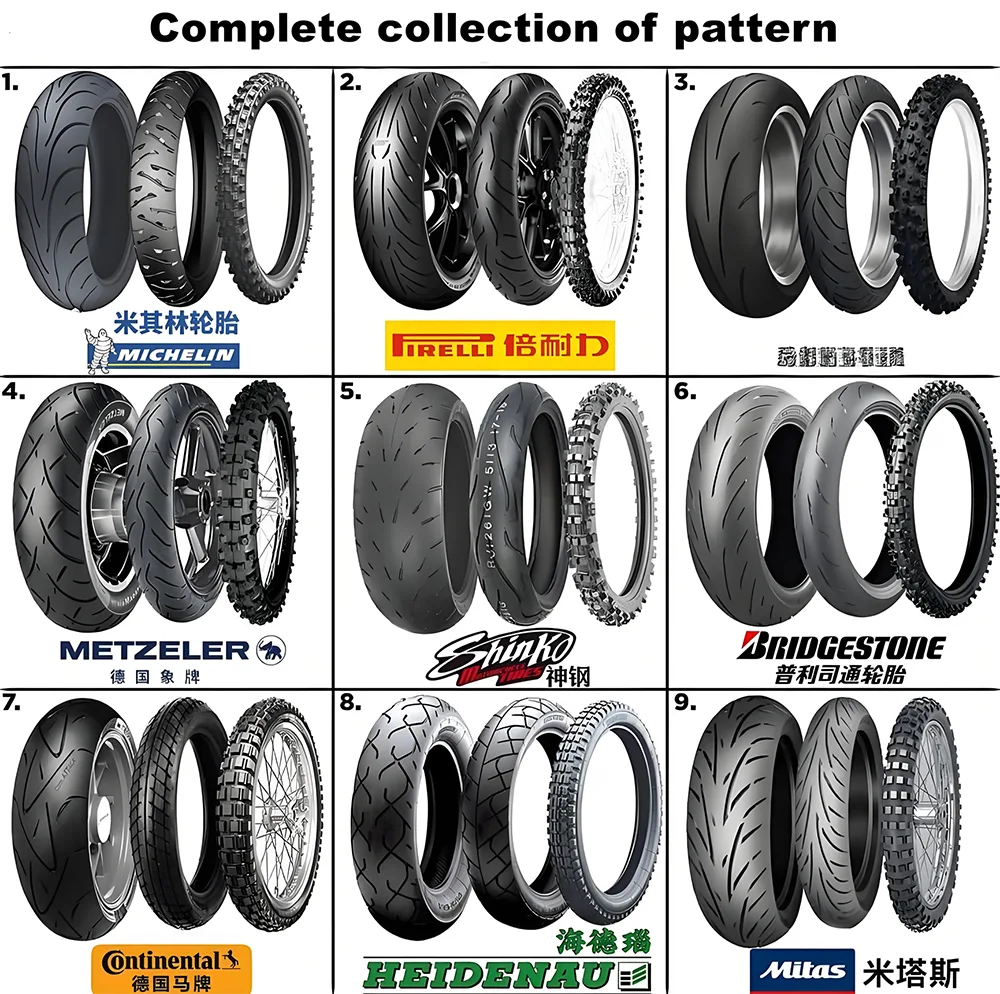
Different tire tread designs are designed to adapt to different road conditions. Motorcycle road tires adopt a fine and continuous pattern design, which can provide good grip on both dry and wet roads, while also having low rolling resistance, suitable for urban roads and high-speed driving; The rough patterns and large spacing of motorcycle off-road tires enable them to maintain excellent grip in complex terrains such as mud, sand, and gravel; The dual-purpose tire cleverly combines road and light off-road performance, with a pattern characteristic that falls between the first two.
Structural type
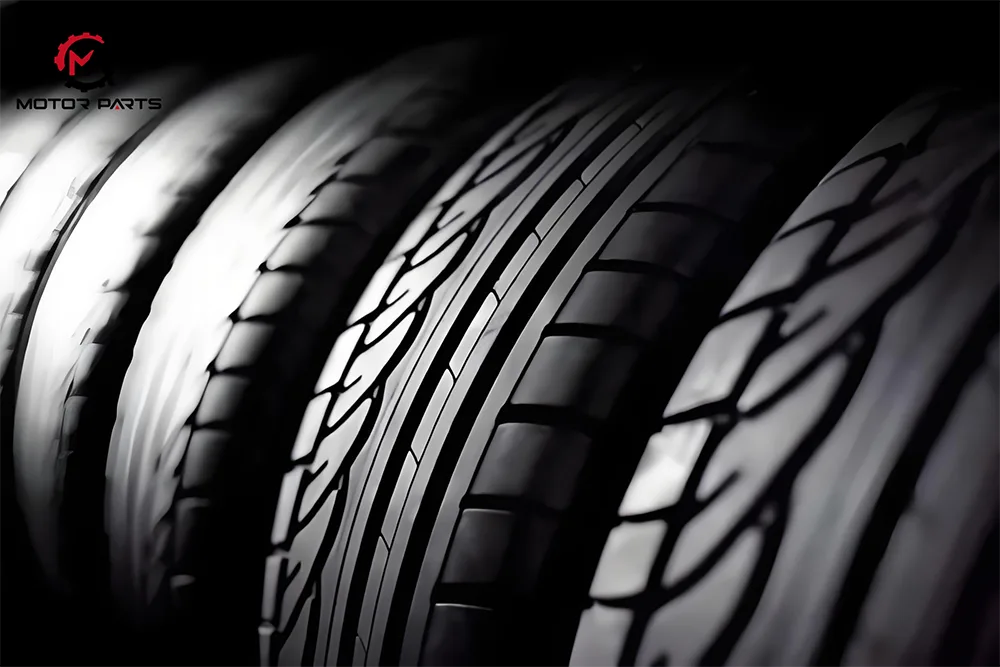
At present, motorcycle tires are mainly divided into two structural types: diagonal tires and radial tires. The carcass ply layers of diagonal tires are arranged in a cross pattern, which is more suitable for motorcycles with low-speed driving and high load requirements due to its simple structure and lower manufacturing cost; The ply of a radial tire is arranged at or near a 90 degree angle to the centerline of the tread. This unique structure endows the tire with good elasticity, low rolling resistance, and outstanding wear resistance, while also maintaining eminent stability at high speeds. Therefore, it is widely used in modern motorcycles.
Rubber hardness
The rubber hardness of motorcycle tires is usually measured by Shore hardness, and different hardness corresponds to different performance. Hard rubber tires have distinguished wear resistance and a long service life, but their grip is relatively weak; Soft rubber tires are known for their strong grip, especially on wet and slippery roads, but their wear resistance is poor and they are more suitable for scenarios that require extremely high performance, like track riding.
|
Tire type
|
Shore hardness range (A)
|
Common Applicable Scenarios
|
Feature Description
|
|
Off road tires - soft
|
About 50 - 55
|
Extreme off-road conditions such as soft sand and mud
|
It can better fit the ground, increase grip, and the tread is prone to deformation to adapt to complex terrain, but its wear resistance is relatively weak
|
|
Off road tires - medium hardness
|
About 55 - 60
|
Mixed terrain, including some gravel roads, dirt roads, etc
|
Balancing a certain level of grip and durability, it can perform well in various off-road conditions
|
|
Off road tires - hard
|
About 60 - 65
|
Hard soil roads and sections with more rocks
|
Strong wear resistance, suitable for driving on hard and complex road surfaces with sharp objects, not easily pierced, but slightly weaker grip on soft ground
|
|
Highway tires - high-performance soft tires
|
About 55 - 60
|
Track cycling, frequent high-speed cornering scenes
|
Provides excellent grip, especially in dry and wet terrain, with excellent handling performance that meets the demanding speed and handling requirements of high-performance motorcycles, but slightly less durability
|
|
Highway tires - conventional soft tires
|
About 60 - 63
|
Urban streets and short distance road cycling
|
While ensuring a certain grip, it has good comfort and can effectively cushion road vibrations during cycling, suitable for daily commuting and general road cycling
|
|
Highway tires - Neutral tires
|
About 63 - 67
|
Comprehensive road conditions, long-distance road travel, mixed urban and suburban sections
|
The performance is relatively balanced, taking into account grip, wear resistance, and comfort, and can adapt to long-distance cycling on various road conditions
|
|
Highway tires - hard
|
About 67 - 70
|
Mostly used for heavy-duty motorcycles, urban distribution, long-distance cargo transportation, etc
|
Excellent wear resistance, able to withstand large weights, suitable for long-term, high load driving conditions, but relatively weak in handling flexibility and grip
|
|
Scooter tires
|
About 60 - 65
|
Daily urban travel
|
Focusing on comfort and durability, it meets the needs of frequent start stop and low-speed driving of scooters in cities, and performs well on flat urban roads
|
Tire pressure standard
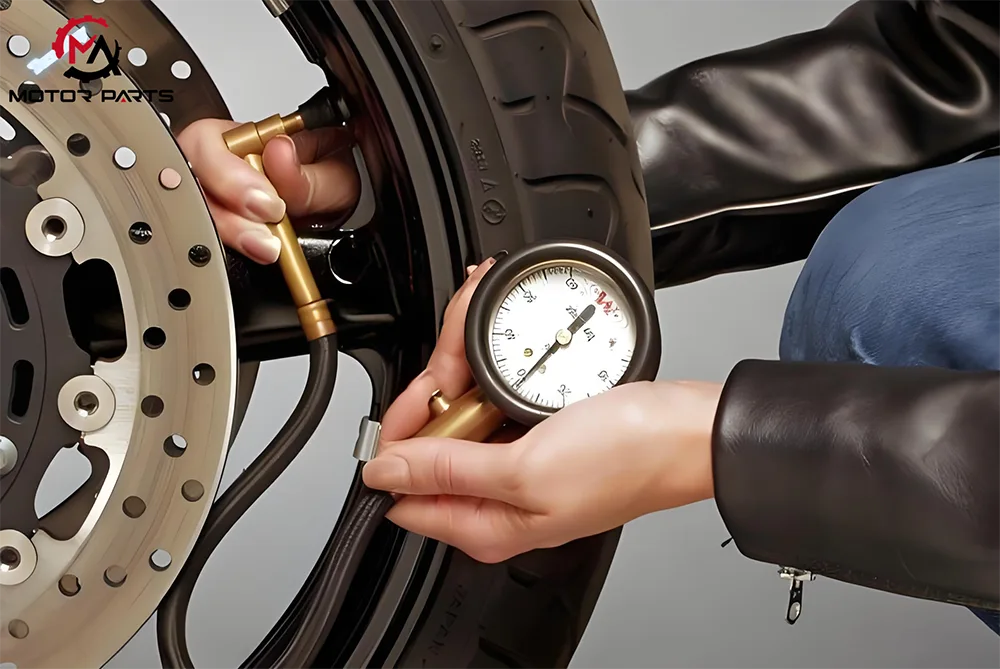
Each tire has its specific recommended tire pressure range, and the tire pressure value directly affects the tire's grip, riding comfort, and service life. Excessive tire pressure can decrease the contact area between the tire and the ground, leading to a decrease in grip and making the riding process bumpy; Low tire pressure can significantly increase rolling resistance, accelerate tire wear, and even cause sidewall damage. Therefore, it is necessary to check and adjust the tire pressure due to the manufacturer's standards before each ride.
|
Motorcycle Type
|
Tire Type
|
Front Tire Pressure (bar)
|
Rear Tire Pressure (bar)
|
Remarks
|
|
Road Motorcycles (Sports Bikes, Street Bikes)
|
Tubeless Tires
|
2.2 - 2.4
|
2.5 - 2.8
|
High - speed driving requirements. Appropriate higher tire pressure ensures stability and handling.
|
|
Road Motorcycles (Sports Bikes, Street Bikes)
|
Standard Tires
|
2.4 - 2.5
|
2.5 - 2.7
|
|
|
Road Motorcycles (Sports Bikes, Street Bikes)
|
Reinforced Tires
|
2.8 - 2.9
|
2.9 - 3.2
|
With a stronger structure, it can adapt to higher pressures.
|
|
Off - Road Motorcycles
|
Tubeless Tires
|
1.7 - 2.1
|
2.1 - 2.4
|
Low tire pressure enhances grip and adapts to complex and rugged terrains.
|
|
Off - Road Motorcycles
|
Standard Tires
|
1.8 - 2.2
|
2.2 - 2.5
|
|
|
Off - Road Motorcycles
|
Reinforced Tires
|
2.0 - 2.4
|
2.4 - 2.6
|
|
|
Scooters
|
Tubeless Tires
|
1.9 - 2.2
|
2.1 - 2.4
|
Mainly for urban commuting, taking into account both comfort and handling.
|
|
Scooters
|
Standard Tires
|
2.0 - 2.2
|
2.2 - 2.5
|
|
|
Scooters
|
Reinforced Tires
|
2.3 - 2.5
|
2.5 - 2.7
|
|
|
Cruiser Motorcycles
|
Tubeless Tires
|
2.1 - 2.3
|
2.3 - 2.6
|
Considering long - distance riding and passenger comfort.
|
|
Cruiser Motorcycles
|
Standard Tires
|
2.2 - 2.4
|
2.4 - 2.7
|
|
|
Cruiser Motorcycles
|
Reinforced Tires
|
2.6 - 2.8
|
2.8 - 3.0
|
|