


Max Trading supplies the CRF110 Dirt Bike Plastic Fuel Tank With Gas Cap Replacement for riders, repair shops, distributors, and motorcycle parts buyers looking for a practical replacement solution. Designed around CRF110 applications, this replacement fuel tank combines a lightweight PP construction, integrated gas cap, stable mounting dimensions, and a 6L fuel capacity to support demanding off-road use.
For a dirt bike, the fuel tank is more than a container for gasoline. It must maintain structural integrity, provide reliable sealing, withstand vibration and outdoor exposure, and remain securely mounted during uneven riding. A properly selected replacement tank can therefore help restore the motorcycle's fuel storage system while reducing concerns associated with cracked, damaged, or worn components.
The CRF110 Dirt Bike Plastic Fuel Tank With Gas Cap Replacement from Max Trading is made from PP material and is specified with a 6L volume, approximately 1200g weight, 200mm installation width, and 390mm length. The product page identifies an applicable model year of 2013–2014 and emphasizes original-vehicle adaptation, sealing, dimensional consistency, and factory quality inspection. Buyers should always verify their motorcycle's exact model year and mounting configuration before ordering.
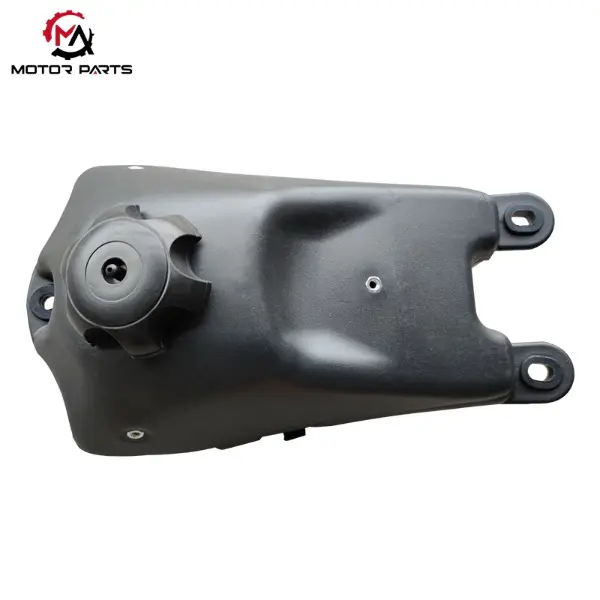
Table of Contents
- Why Does a CRF110 Fuel Tank Need Replacement?
- What Should You Know About This Replacement Fuel Tank?
- What Are the Key Features of the Fuel Tank?
- How Should You Select the Right CRF110 Fuel Tank?
- How Should the Replacement Fuel Tank Be Installed?
- How Can You Maintain a Plastic Dirt Bike Fuel Tank?
- Why Is Factory Direct Supply Important for Buyers?
- Frequently Asked Questions
- Conclusion
Why Does a CRF110 Fuel Tank Need Replacement?
A dirt bike fuel tank operates in an environment where vibration, impacts, temperature changes, dust, moisture, and repeated movement are common. Over time, these conditions can contribute to physical damage or deterioration of the tank and its sealing components.
Typical reasons for replacing a fuel tank include:
- Visible cracks, deformation, or impact damage.
- Fuel leakage around the tank or connection areas.
- Worn or damaged mounting points.
- Degraded sealing or fuel cap components.
- Long-term exposure to heat, sunlight, and outdoor conditions.
- A need to restore a damaged motorcycle to reliable riding condition.
A replacement should not be selected solely by appearance. Mounting dimensions, fuel capacity, material, sealing structure, model compatibility, and fuel-system connections all deserve attention. Honda documentation also emphasizes safe fuel handling and secure fuel-cap installation when servicing the CRF110F fuel system.
What Should You Know About This Replacement Fuel Tank?
The CRF110 Dirt Bike Plastic Fuel Tank With Gas Cap Replacement is positioned as a replacement and modification component for CRF110 off-road applications. Max Trading describes the tank as being manufactured from high-density PP material and produced using an injection molding process.
The design focuses on practical installation and durability. The tank follows the intended mounting structure and body curvature of the applicable motorcycle, while the supplied fuel cap is designed to work with the tank's sealing and breathing arrangement.
| Parameter | Product Information | Why It Matters |
|---|---|---|
| Product Type | Plastic motorcycle fuel tank with gas cap | Provides a replacement fuel storage assembly |
| Material | PP | Supports a lightweight and durable construction |
| Applicable Model | CRF | Helps buyers identify the intended motorcycle family |
| Applicable Model Year | 2013–2014 | Important for compatibility verification |
| Fuel Capacity | 6L | Defines the available fuel storage volume |
| Weight | Approximately 1200g | Useful for replacement and handling considerations |
| Installation Width | 200mm | Helps confirm mounting compatibility |
| Length | 390mm | Provides a key dimensional reference |
| Transmission Type | MT / Manual | Helps buyers match the intended vehicle configuration |
What Are the Key Features of the Fuel Tank?
PP Construction for Off-Road Applications
Polypropylene is commonly used for applications requiring a combination of low weight and resistance to everyday mechanical stress. In an off-road environment, keeping unnecessary weight under control while maintaining structural integrity can be useful for recreational riders and replacement-parts buyers.
Sealing and Breathing Structure
The tank is supplied with a gas cap and is designed around a breathing and pressure-relief structure. Proper fuel-tank ventilation is important because pressure changes can occur as fuel is consumed and temperatures fluctuate. A correctly functioning cap and vent arrangement helps maintain appropriate fuel-system operation.
Rounded Edge Design
The product incorporates rounded and chamfered corners rather than relying on unnecessarily sharp edges. This approach is relevant to dirt bikes because the motorcycle can encounter uneven terrain, falls, branches, stones, and repeated contact during off-road riding.
Stable Mounting Configuration
Correct mounting is essential for a replacement fuel tank. The product is designed around the intended mounting-hole positions and body geometry of its specified application. Proper alignment can help prevent unwanted movement, vibration, or stress on connected components.
Factory Quality Inspection
According to Max Trading's product information, inspection procedures include air-tightness testing, dimensional checking, and appearance screening before shipment. These checks are particularly relevant for fuel-system components because leakage and dimensional defects can affect installation and safe operation.
How Should You Select the Right CRF110 Fuel Tank?
Choosing a replacement tank requires more than searching for the phrase “CRF110 fuel tank.” Different model years or configurations may use different dimensions, mounting arrangements, fuel-system components, or filler-cap designs. Buyers should therefore confirm the following information before placing an order.
- Confirm the motorcycle model and year. Check the motorcycle documentation and compare it with the supplier's compatibility information.
- Compare mounting dimensions. Verify hole positions, installation width, overall length, and surrounding body clearance.
- Check the fuel capacity. Make sure the replacement capacity is appropriate for the intended riding application.
- Inspect the fuel-system connections. Compare the fuel outlet, hose routing, filler area, and other connection points.
- Confirm the gas cap arrangement. The cap and ventilation structure should be compatible with the tank and motorcycle.
- Ask for technical confirmation when uncertain. A professional supplier can help reduce the risk of purchasing an incompatible component.
For additional motorcycle component information, buyers can also explore Max Trading's motorcycle fuel tank accessories category.
How Should the Replacement Fuel Tank Be Installed?
Fuel-system work should always be performed in a suitable environment by someone familiar with motorcycle maintenance. Gasoline is highly flammable, so the engine should be stopped and the work area should be kept away from flames, sparks, cigarettes, and other ignition sources.
A general replacement workflow may include:
- Park the motorcycle securely in a stable, well-ventilated work area.
- Allow hot engine and exhaust components to cool completely.
- Drain or otherwise safely manage the fuel according to the motorcycle manufacturer's service procedure.
- Remove the components that obstruct access to the existing fuel tank.
- Disconnect the applicable fuel-system connections carefully.
- Remove the original tank without forcing or damaging surrounding components.
- Compare the replacement tank with the original component before installation.
- Align the mounting holes and connections without drilling or modifying the tank.
- Secure the tank using the appropriate fasteners without excessive tightening.
- Install the gas cap and verify the sealing and vent arrangement.
- Inspect all connections and mounting points before adding fuel.
- After installation, check carefully for leakage before riding.
Do not treat these steps as a substitute for the motorcycle manufacturer's service manual. If the tank does not align naturally with the intended mounting points, stop the installation and verify compatibility rather than forcing the component into position.
How Can You Maintain a Plastic Dirt Bike Fuel Tank?
Regular inspection can help identify potential fuel-system problems before they become more serious. A replacement tank should be checked periodically, especially when the motorcycle is frequently used on rough terrain.
- Inspect for cracks: Check the tank surface and mounting areas after heavy impacts or falls.
- Check the cap: Make sure the fuel cap remains secure and its sealing components are in good condition.
- Inspect connections: Look for damaged hoses, loose fittings, or signs of fuel seepage.
- Avoid overfilling: Leave appropriate expansion space when refueling.
- Limit prolonged exposure: Protect the motorcycle from unnecessary long-term sunlight and harsh weather when stored.
- Keep the tank clean: Prevent dirt, dust, and water from entering the fuel system during maintenance.
- Inspect after crashes: Off-road impacts can affect both the tank and its mounting hardware.
When a motorcycle will be stored for an extended period, follow the manufacturer's recommended fuel-storage procedure. Proper storage can help protect the tank, fuel system, and engine from avoidable deterioration.
Why Is Factory Direct Supply Important for Buyers?
For individual riders, the primary concern is usually compatibility and replacement quality. For distributors, repair shops, motorcycle retailers, and wholesale buyers, supply consistency becomes equally important.
Factory-direct sourcing can provide several practical advantages:
- Consistent specifications: Production can follow standardized dimensions and material requirements.
- Bulk purchasing: Wholesale orders can be arranged for distributors and parts retailers.
- Customization support: Qualified manufacturers may provide product or packaging adjustments for suitable projects.
- Quality inspection: Production-stage inspection can help identify dimensional, sealing, and appearance problems.
- Technical communication: Direct communication can make compatibility and specification confirmation easier.
- Long-term supply: Stable supplier relationships can support recurring replacement-parts demand.
Max Trading positions this product as a factory-direct motorcycle component and supports spot orders, bulk customization, and distribution cooperation. Buyers can review the Max Trading motorcycle parts range to compare related replacement components.
Frequently Asked Questions
Is this fuel tank designed for the Honda CRF110?
The product is designed for CRF110-related applications, and the supplied product information specifies an applicable model year of 2013–2014. Buyers should verify the exact motorcycle year, dimensions, and mounting configuration before ordering.
What material is used for the replacement fuel tank?
The tank is specified as PP, or polypropylene. The product description emphasizes a high-toughness plastic construction intended for off-road riding conditions.
What is the fuel capacity?
The listed capacity is 6 liters. The actual usable fueling procedure should always follow the motorcycle manufacturer's safety and refueling instructions.
Does the product include a gas cap?
Yes. The product is described as a plastic fuel tank with gas cap replacement, with the cap forming part of the intended sealing and ventilation arrangement.
Can the fuel tank be modified by drilling new holes?
No. The product instructions specifically advise against unauthorized drilling or structural modification. If the mounting holes do not align correctly, compatibility should be confirmed before installation.
Is this product suitable for wholesale purchasing?
Yes. Max Trading describes support for spot supply, bulk customization, and long-term distribution cooperation, making the product suitable for motorcycle parts distributors, retailers, repair businesses, and other procurement applications.
Conclusion
A reliable replacement fuel tank should provide more than basic fuel storage. Compatibility, material selection, mounting accuracy, sealing performance, ventilation, and inspection quality all influence the practical value of a replacement component. The CRF110 Dirt Bike Plastic Fuel Tank With Gas Cap Replacement combines PP construction, a 6L capacity, specified mounting dimensions, and an integrated gas-cap solution for its stated CRF110 application.
Whether you are replacing a damaged tank on one dirt bike or sourcing motorcycle components for a distribution business, verifying model compatibility and installation dimensions before purchase is essential. For product specifications, bulk purchasing, customization requirements, or supplier cooperation, contact us at Max Trading to discuss your motorcycle fuel tank requirements and receive professional product support.