Many scooter riders have encountered problems such as severe body shaking, weak starting, high fuel consumption, slow acceleration, abnormal transmission noise, slipping, and extremely short belt usage time. At this time, people may think that there is a problem with the motorcycle's transmission system, so they try to replace the belt to solve this situation, but the effect is still not satisfactory. So, where exactly is the problem?
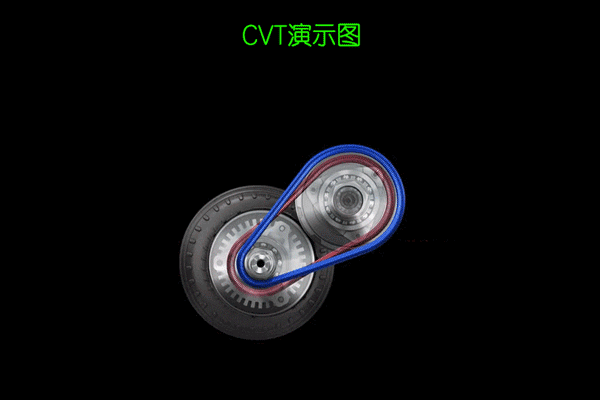
Firstly, because the scooter is equipped with a CVT gearbox, a continuously variable transmission, and all core components are located within the gearbox. Max Trading's article helped riders master the role of each core component in transmission, understand the manifestations of problems, and independently complete preliminary fault diagnosis when encountering transmission system related failures in the future, effectively avoiding maintenance traps such as unreasonable charges and component replacement during the repair process.
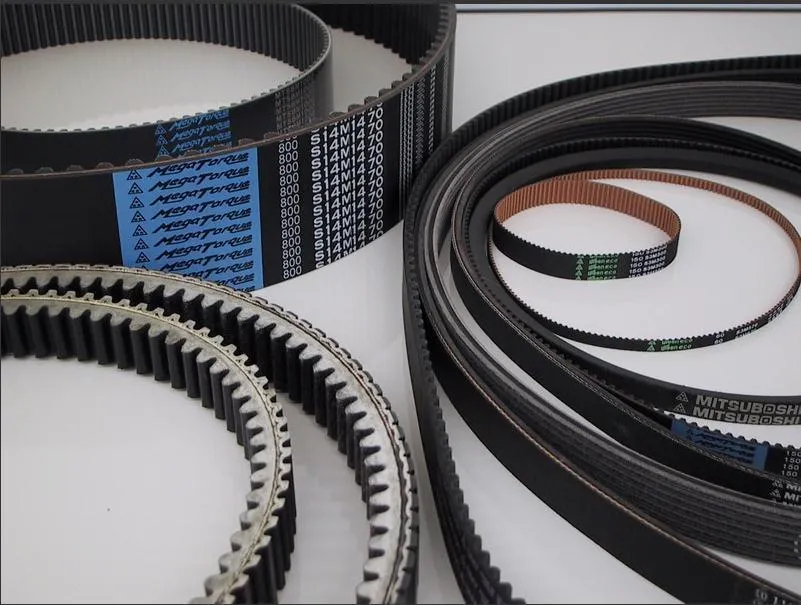
When starting, if the engine roars when the throttle is turned, the speed cannot be increased, and the power slips; First, check the surface of the transmission belt and find cracks, fuzz, elongation and deformation; When the transmission box makes friction noise during cycling and the starting force is weak; Most likely, it is a problem with the belt, which requires inspection or even replacement.
Because the belt is the "link" for transmission, connecting the disc and Clutch Drum, transmitting the power of the engine to the wheels, the elasticity of the belt is essential for the normal operation of the continuously variable transmission. Without this elasticity, it is impossible to freely control the radius of the front and rear drive plates of the transmission wheel, and use the friction between the plate surface and the belt to transmit power. The material of the belt and its compatibility with the drive plate are also crucial. Only with good coordination can the belt not slip and the power not be wasted when the power is increased.
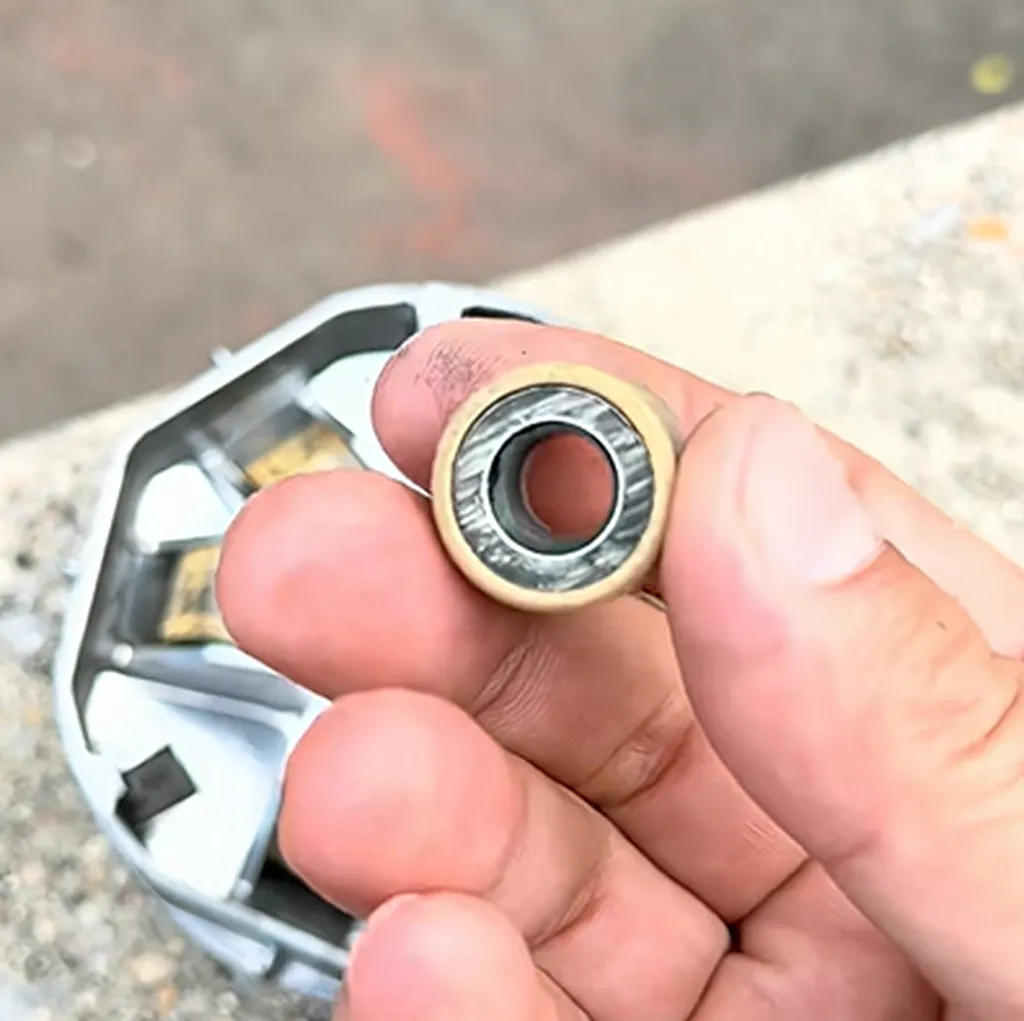
If the motorcycle accelerates slowly, lacks power when going uphill, and fuel consumption increases; Upon inspection, it was found that the Roller weights were worn and becoming lighter, with insufficient centrifugal force and insensitivity to speed changes; Belt deviation and abnormal wear are most likely due to uneven wear of the Roller weights. Then it is necessary to replace the Roller weights. This is irreparable.
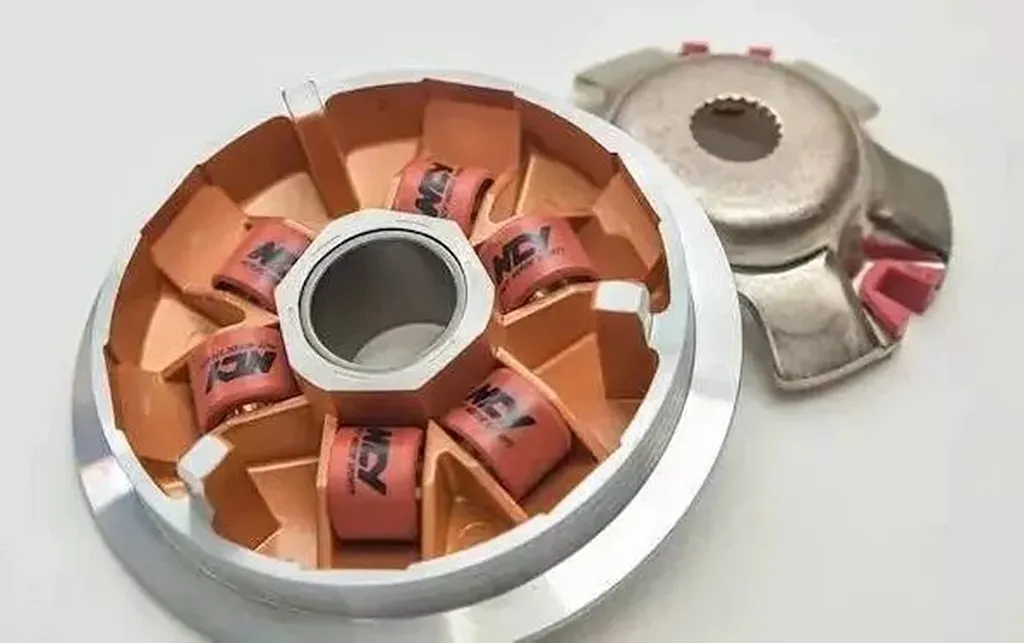
Because the Roller weights is a counterweight block installed in the Pulley disk, it controls the opening and closing of the Pulley disk by centrifugal force, adjusts the speed of transmission, and directly affects acceleration and fuel consumption. The heavier the Roller weights, the stronger the pushing force brought by centrifugal force, and the belt is pushed outward on the Pulley disk, resulting in a larger working radius.
That is to say, the heavier the Roller weights, the higher the vehicle speed at the same RPM. On the other hand, the lighter the Roller weights, the harder it is to push the Pulley disc, the smaller the belt radius, and the lower the vehicle speed at the same speed.
At the same speed, using a heavier Roller weights will result in a lower engine speed, more fuel efficiency, and less noise, but the starting and acceleration will be slower; Using lighter Roller weights results in a more aggressive start and faster acceleration, but higher high-speed revs and higher fuel consumption.
If there are deep grooves on the surface of the motorcycle disc, the transmission belt will get stuck and slip; There is abnormal noise in the gearbox, and power is interrupted when accelerating; The heat dissipation is also not good, the surface is hot, and the components are accelerating aging, most likely due to the problem with the motorcycle's driving wheel.
Because the Pulley disc is paired with Roller weights to change the diameter of the belt through opening and closing, achieving stepless speed change. It is divided into front Pulley plate and rear Pulley plate, mainly composed of Pulley plate, Roller weights, pressure plate, maple leaf plate and other components. The grooves in the Pulley disk and the inclined surfaces on the pressure plate convert the centrifugal force that pushes the Roller weights outward into the axial force that pushes the Pulley disk forward.
So, changing the shape of the grooves and slopes directly alters the shifting characteristics of the entire CVT.
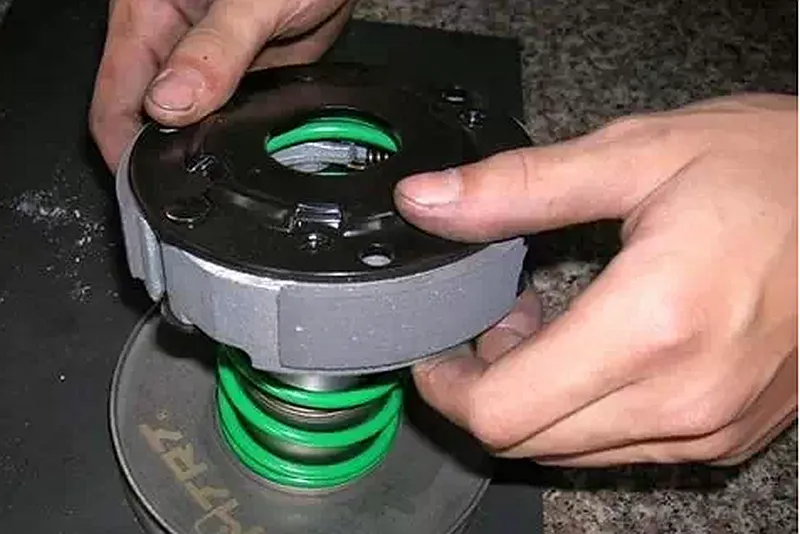
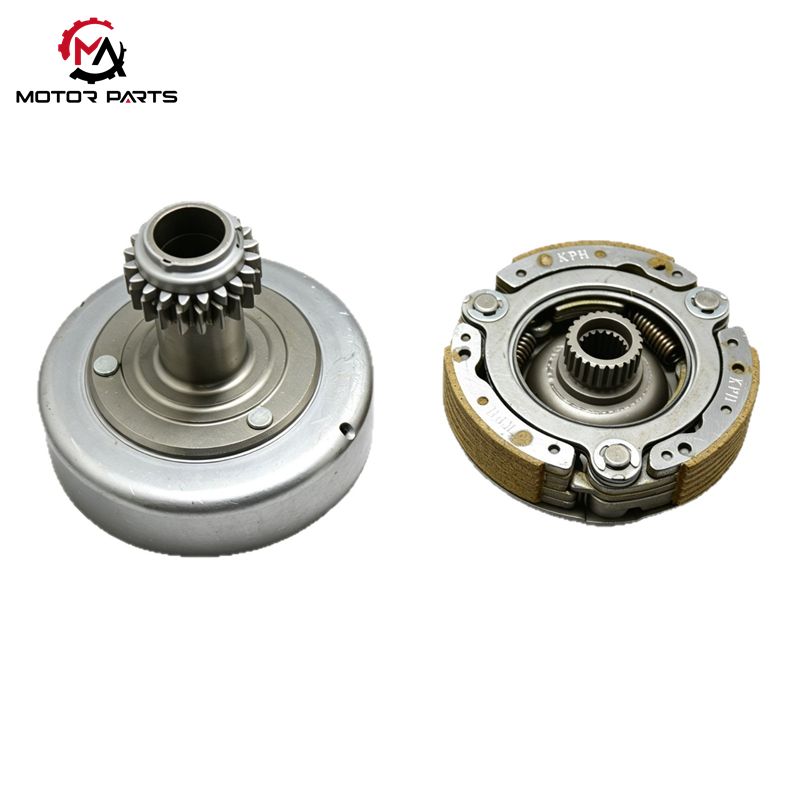
When there is severe shaking at the beginning, the shaking disappears when running; Discovery of wear and thinning of the clutch clutch clutch block, surface slippage, and loose coupling; The swing block spring is broken and the power transmission is not smooth. Most likely, it is a problem with the clutch block.
Because the clutch lever relies on centrifugal force and Clutch Drum to combine/separate and control the cutting and transmission of power, it is equivalent to an automatic clutch. The only adjustable components are the clutch spring and clutch drum (bowl). The function of the small spring is to control the speed at which the clutch engages. Clutches (such as the MIO125 motorcycle clutch pulley driven wheel from Max Trading) rely on centrifugal force during rotation to overcome the tension of small springs, release the shoes, and engage with the clutch drum. Friction is crucial throughout the entire transmission process: it is necessary to ensure stable power transmission while also preventing slipping and burning under the high temperature generated by high-speed friction.
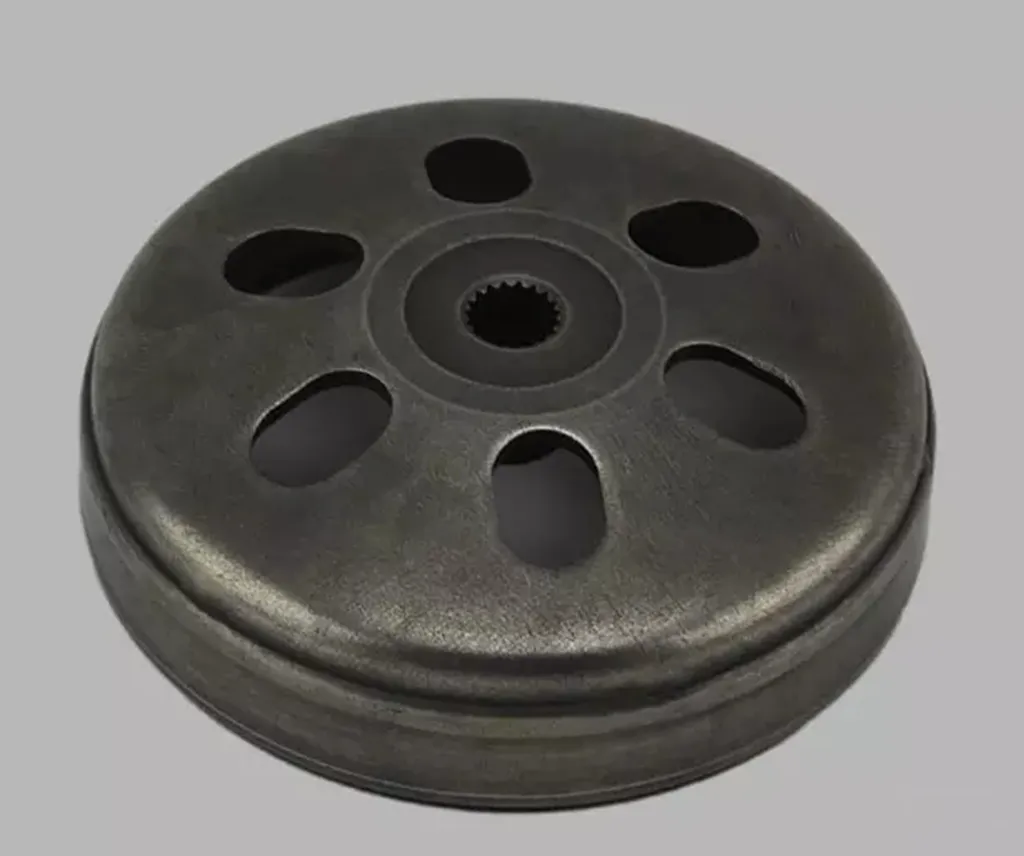
When the inner wall is found to be burnt blue, scratched, uneven, and shaking when starting; Friction with the clutch block produces abnormal noise and severe heating; The accumulation of belt debris in Clutch Drum exacerbates component wear. This is clearly an issue with Clutch Drum.
Because Clutch Drum mainly cooperates with clutch pads to receive the power transmitted by belts, it is the friction contact surface of motorcycle clutches. That is, the "friction working surface" of the clutch, responsible for catching power, transmitting power, withstanding high temperatures, and not slipping. Without Clutch Drum, the CVT transmission would break the last link, making it difficult to transmit power to the car.
Max Trading provides you with professional problem analysis solutions, so you don't have to worry about pre-sales and after-sales issues when purchasing our products. We have a professional technical team to serve you and help customers avoid detours.