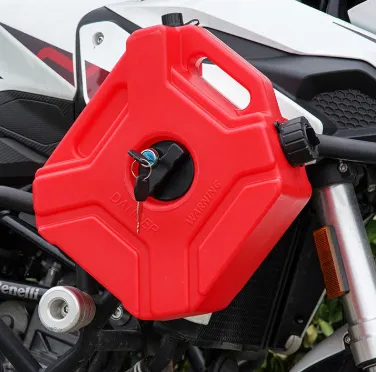
In fact, the backup mailbox for motorcycles is not directly assembled onto the motorcycle body, but rather an independent oil storage unit.
For the vast majority of motorcycle owners without any motorcycle travel experience, the core issue that is most easily overlooked and affects the safety and experience of long-distance motorcycle travel is undoubtedly the control of vehicle fuel consumption. Especially for riders who choose mainstream commuting vehicles such as small pedals, large pedals, and curved beam bikes for motorcycle travel, they are more likely to encounter such tricky problems.
This type of vehicle has a low daily commuting fuel consumption, giving riders the illusion of sufficient range. However, long-distance mountain roads, upwind sections, continuous constant speed driving, and the carrying capacity of passengers and cargo will significantly increase the actual fuel consumption, far exceeding the commuting fuel consumption of vehicles. And how should we respond if there is a fuel shortage during the journey?
Firstly, we need to understand the actual volume of the original vehicle's fuel tank, the type of auxiliary fuel tank, and the selection of a spare fuel tank.
There are significant differences in fuel tank capacity among different types of motorcycles. Taking the following common models as examples
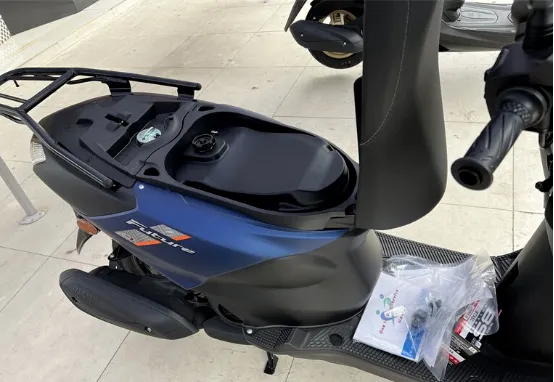
Construction of Yamaha Qiaoge i, 5.1L
Honda WING NSS350, 11.7L
Liteng 190 (curved beam), 10.0L
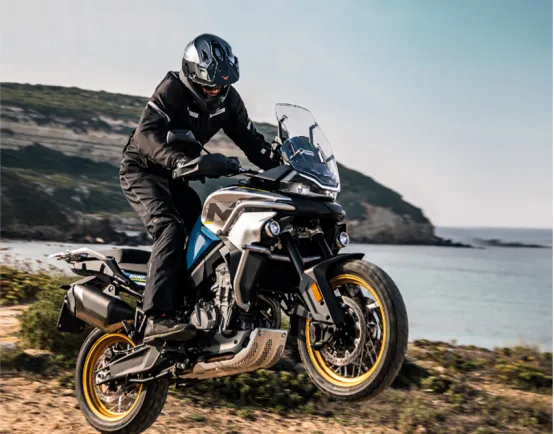
Chunfeng 800MT, 19.0L
BMW R1300 GS, 19.0L
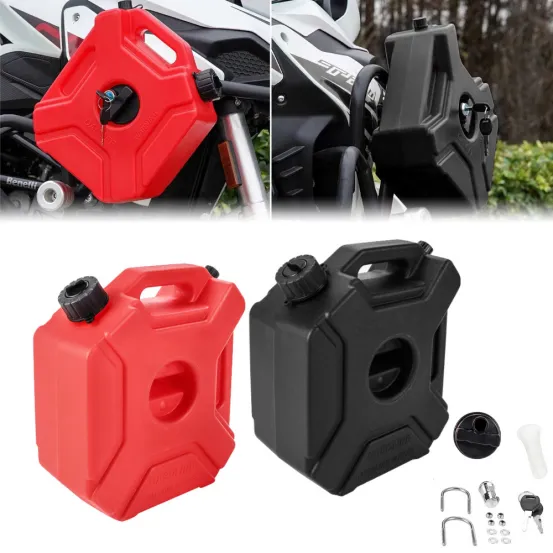
If you want to travel by motorcycle, you need to choose between the auxiliary fuel tank and the spare fuel tank. First, let's talk about the lower cost spare fuel tank; Typical spare oil pots are made of stainless steel and plastic, such as Max Trading's 5 L Lockable Leakproof Gas Can Fuel Tank for Motorcycle Camping。 This oil pot is lightweight and corrosion-resistant, making it an oil storage assistant for long-distance travel. It not only has stable sealing performance and is not prone to leakage, but also has strong pressure resistance, suitable for use in various road conditions.
The attributes of the auxiliary fuel tank are completely different from those of the spare fuel tank. The spare fuel tank is easily accessible, while the auxiliary fuel tank is often modified and installed on the frame, with a static conductive design and can be connected to the original vehicle oil circuit. After installation, it has become a part of the vehicle.
Suddenly running out of fuel on remote roads, winding mountain roads, or unmanned rural roads not only completely interrupts the cycling journey and brings great travel difficulties, but also hides many safety hazards;
Stranded roads in the wilderness with sparse traffic not only make it difficult to seek help in a timely manner, but also significantly increase the risk of accidents at night and in adverse weather conditions.
At the same time, sudden fuel shortages can directly disrupt the overall travel budget. Temporary calls for rescue, towing, or additional transportation expenses to travel to nearby gas stations can make the originally planned travel expenses difficult, greatly reducing the experience of long-distance motorcycle travel.
In addition, for vehicles with small fuel tank capacity and limited range such as small pedals and curved beam cars, a spare fuel tank can effectively extend the range. When facing long mountain roads, unmanned national roads and other road sections with high range pressure, there is no need to constantly worry about the remaining fuel level or frequently search for gas stations. At the same time, the compliant and portable backup oil cans produced by Max Trading have been professionally adapted for sealing and safety, earthquake resistance, leak prevention, high temperature resistance, and are suitable for motorcycle riding on bumpy road conditions without oil leakage or safety hazards. They are lightweight and easy to carry, do not occupy storage space, and fully meet the needs of various types of scooters and street bikes for motorcycle travel.
For novice motorcycle riders, a small spare fuel tank can not only avoid the risk of unknown road conditions, but also stabilize travel budgets and improve travel fault tolerance. It is the most cost-effective and essential safety equipment for long-distance motorcycle travel.