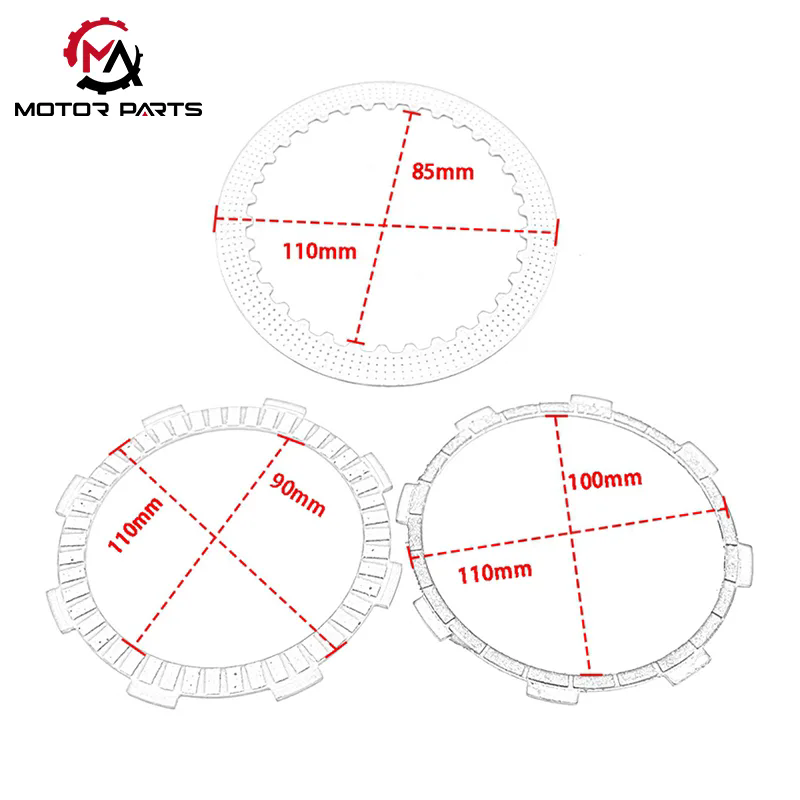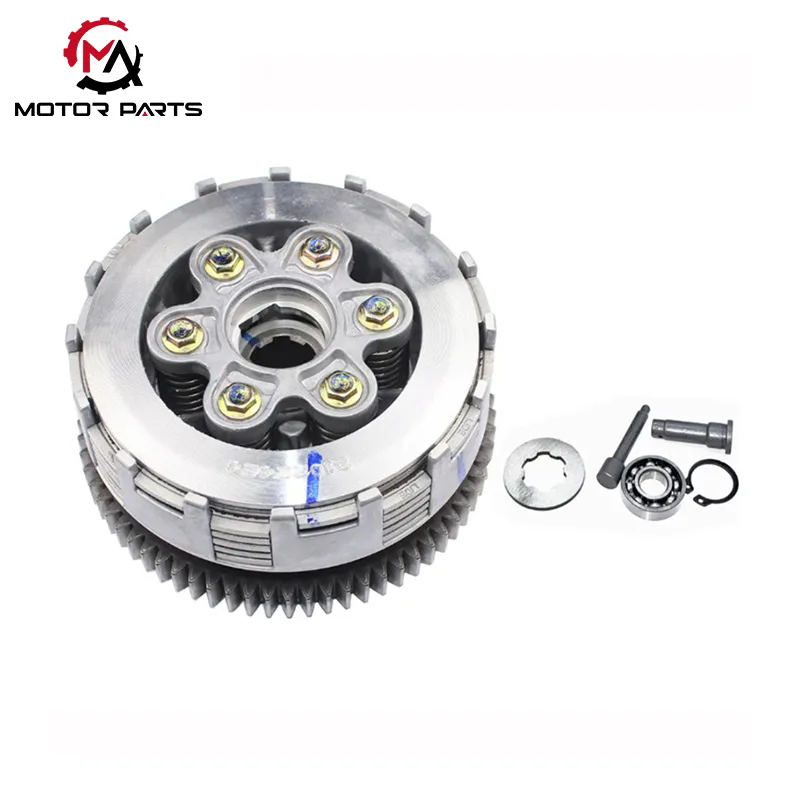
The KTM Motorcycle Clutch Plate is a critical component of the transmission system, responsible for transferring engine power to the gearbox while ensuring smooth engagement and disengagement. Riders often face issues like slipping, excessive wear, or uneven engagement if the clutch plate is substandard or worn out. Understanding its specifications, types, and maintenance can prevent performance loss and costly repairs.
The clutch plate in a KTM motorcycle is a friction disc sandwiched between the engine flywheel and pressure plate. Its function is to smoothly transfer torque from the engine to the transmission, allowing riders to change gears efficiently without jerks or engine stalling. High-quality clutch plates ensure durability, heat resistance, and consistent performance under extreme conditions.
| Parameter | Description |
|---|---|
| Material | High-friction composite or sintered metal for superior heat resistance |
| Diameter | Varies by KTM model, typically 120-140 mm |
| Thickness | 3-4 mm friction plate thickness, steel plates 1.5-2 mm |
| Number of Plates | 5-7 friction plates with alternating steel plates |
| Compatibility | Suitable for KTM Duke, RC, EXC, and Adventure series |
| Durability | High wear resistance up to 20,000 km depending on riding style |
| Heat Tolerance | Up to 350°C under heavy load conditions |
Choosing the proper KTM clutch plate depends on several key factors:
Clutch plate issues can affect overall motorcycle performance. Common problems include:
Q1: How often should a KTM clutch plate be replaced?
A1: Clutch plates should typically be replaced every 15,000–20,000 km, depending on riding style, load, and terrain. Aggressive riders or off-road use may require earlier replacement.
Q2: Can I install a KTM clutch plate myself?
A2: While it is possible for experienced riders, professional installation is recommended to ensure proper torque settings and correct alignment, avoiding premature wear or damage.
Q3: What type of material is best for KTM clutch plates?
A3: High-friction composite plates are preferred for smooth operation and longevity, while sintered metal plates provide superior heat resistance and performance for aggressive riding.
Q4: How can I tell if my clutch plate is worn?
A4: Signs include clutch slippage, unusual noise, difficulty in gear shifts, or a soft clutch lever feel. Visual inspection can also reveal thinning friction material or warped steel plates.
Max Trading provides high-quality KTM Motorcycle Clutch Plates with guaranteed compatibility and performance. Ensure your KTM runs smoothly with our premium clutch components. For inquiries or to place an order, contact us today and experience reliable motorcycle performance like never before.