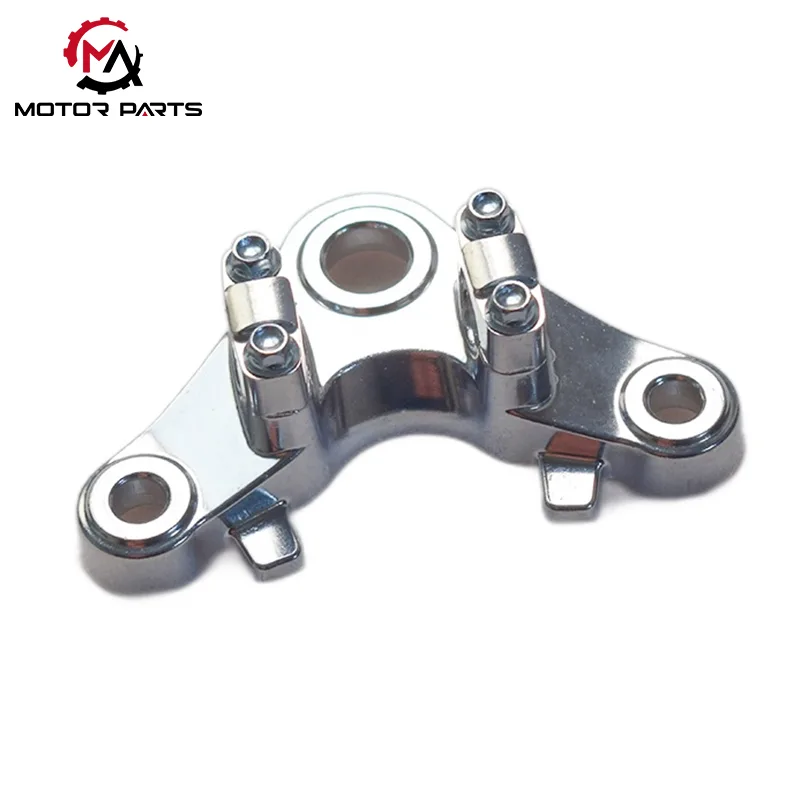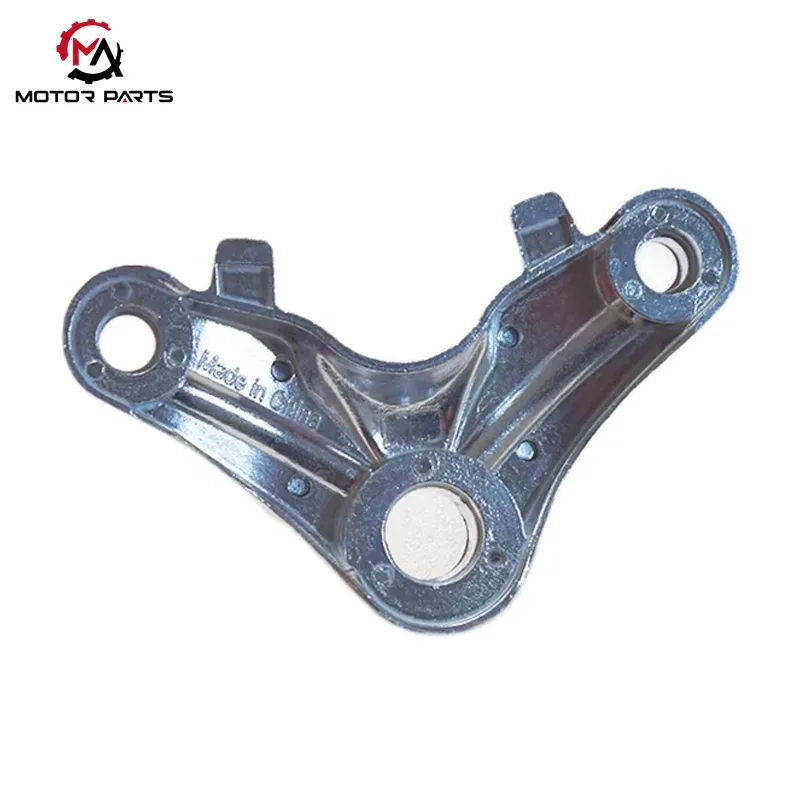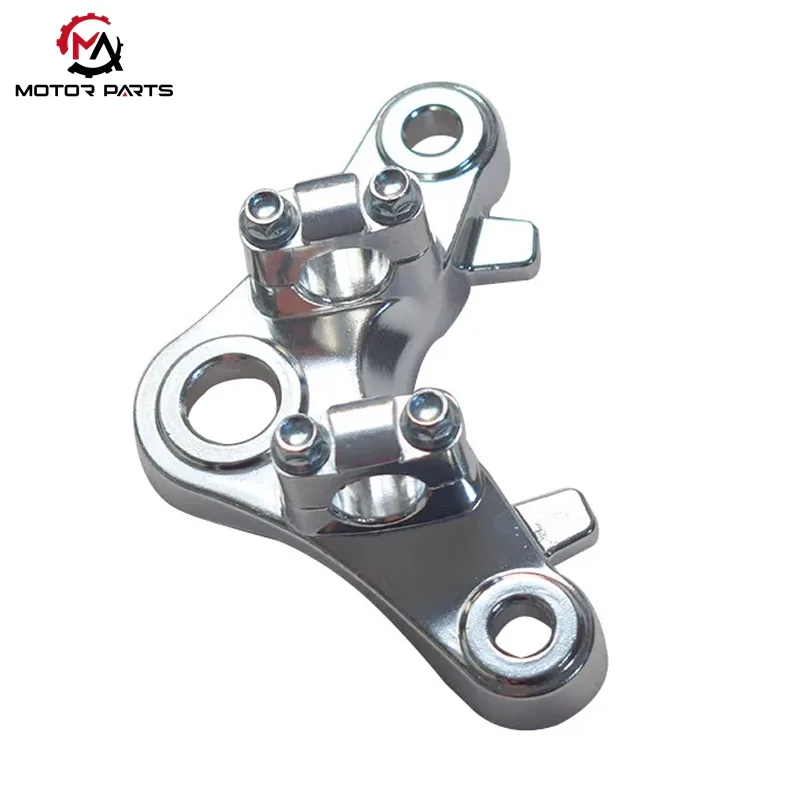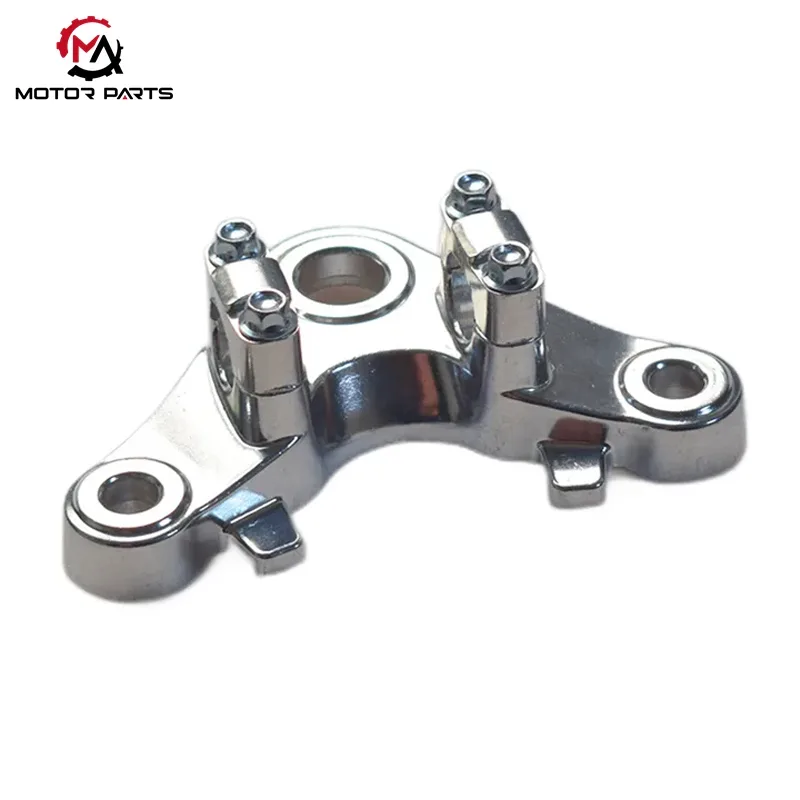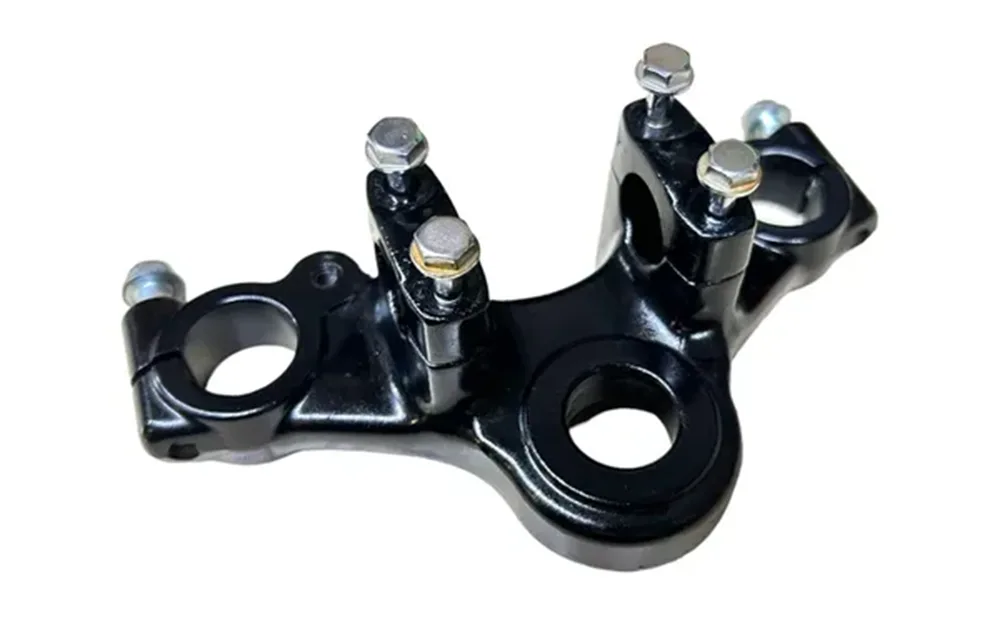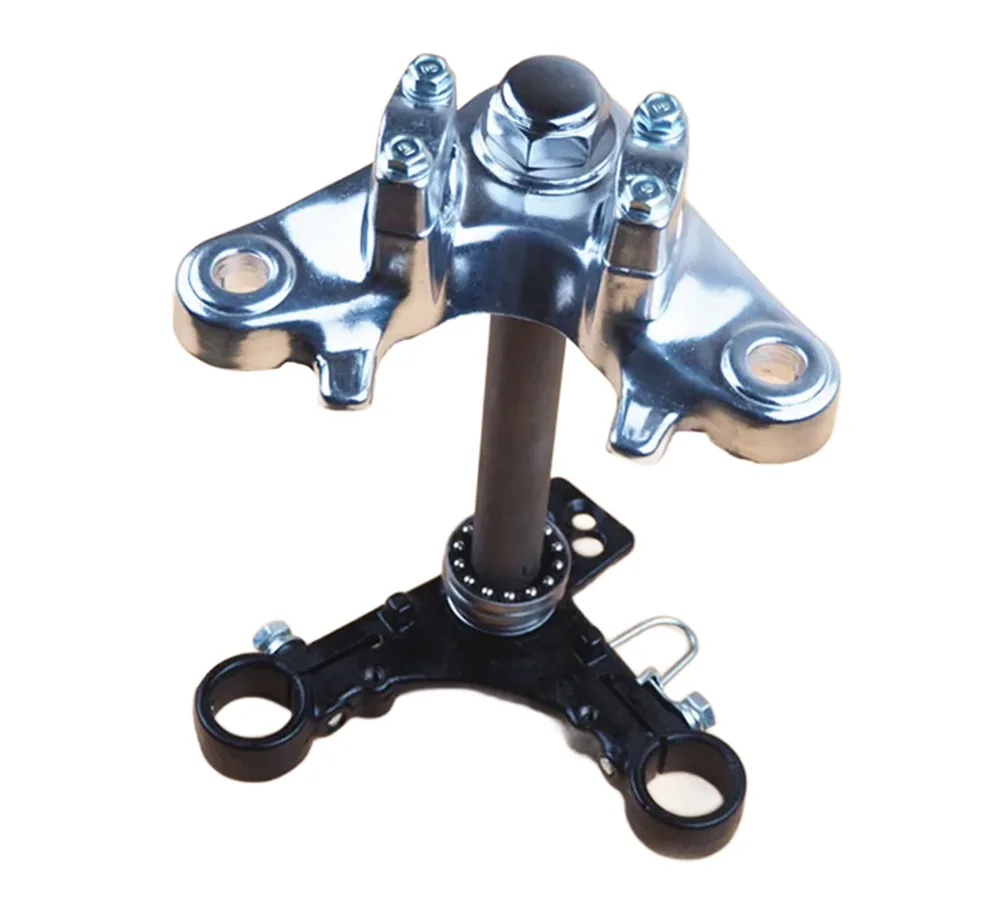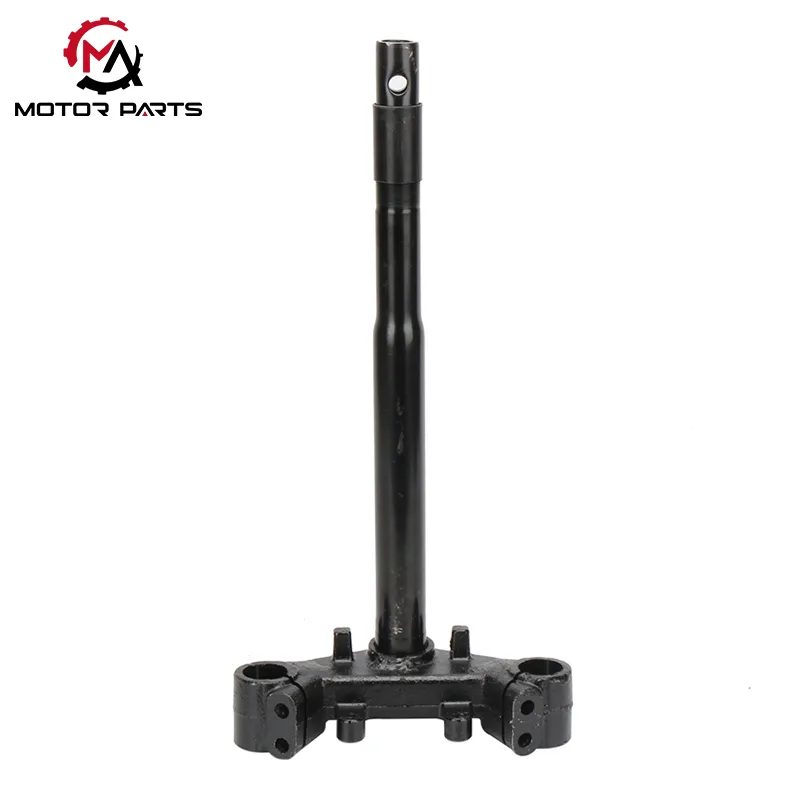
Max Trading specializes in the R&D and supply of motorcycle structural components. Our Honda CG125 Motorcycle Upper Connecting Plate, a core load-bearing and steering component connecting the CG125 fork, shock absorbers, and frame, has undergone engineering optimization across four dimensions: structural mechanics, material processing, installation compatibility, and long-term durability. This upper connecting plate features an industry-standard boomerang shape and a triangular three-point hole layout, combined with a zoned thickness design, integrated reinforcing ribs, and an arc-shaped weight-reducing cavity. It achieves both high strength and lightweight construction. Multiple anti-corrosion treatments, including electrophoresis, powder coating, and galvanizing, ensure its long-term adaptability to rainy, muddy, and bumpy environments.
The Honda CG125 Motorcycle Upper Connecting Plate is compatible with 22–28mm center seat tube diameters, 130–150mm shock absorber hole spacing, and M10/M12 universal bolts. Ordinary users can easily disassemble and replace it using standard tools. It provides stable low-speed handling to prevent hand slippage and also improves handlebar stability at high speeds, catering to both beginner-friendly features and experienced riders' demands for vehicle stability.
I. Overall Structural Layout Design
In the front-end system of the CG125 motorcycle, the upper connecting plate is the core load-bearing component connecting the front fork, shock absorber, and frame. The Honda CG125 Motorcycle Upper Connecting Plate adopts the industry-standard "boomerang shape" structural design, achieving stable load distribution and precise steering control through scientifically designed hole placement.
Three-Point Hole Layout
Central hole: Front fork steering tube mounting hole, approximately 25mm in diameter
Left and right holes: Front shock absorber fixing holes, lateral distance 130–150mm
Stress Structure Characteristics
Three points form a stable triangular structure
Steering force and shock absorber impact force are evenly transmitted to the frame
Effectively reduces localized stress concentration and improves overall structural stability
This structure is particularly suitable for commuter motorcycles like the CG125, maintaining stable handling on urban roads and complex road conditions.
II. Plate Thickness and Mechanical Optimization Design
To balance strength and lightweight requirements, the upper connecting plate uses differentiated structural design in different areas:
Thickened core load-bearing area
Central area thickness: 8–12mm
Bears the main steering and vertical loads
Thinned edge area
Edge thickness controlled at 5–8mm
Reduces overall weight while maintaining rigidity
This partitioned thickness design ensures that the structure maintains good fatigue resistance even under high-intensity use.
III. Lightweight and Reinforced Structural Design
On the bottom structure of the Honda CG125 Motorcycle Upper Connecting Plate, performance is further enhanced through geometric optimization:
Integrated reinforcing ribs
Enhances bending and torsional resistance
Improves overall impact resistance
Arc-shaped weight-reducing cavities
Weight reduction in non-critical load-bearing areas
Overall weight reduced by approximately 30% compared to a purely solid structure
Reduces the risk of fracture and improves long-term reliability
In the CG125 series motorcycles, the upper connecting plate utilizes various mature material solutions across different markets and versions to balance cost, strength, and durability requirements.
Cold-rolled steel plate (Mainstream solution)
Early Honda original parts, as well as domestic brands such as Zongshen and Lifan, commonly used cold-rolled steel plate stamping and forming processes.
Controllable cost, suitable for mass production
Strong resistance to plastic deformation, suitable for bearing longitudinal loads
Very suitable for long-term, high-frequency use in commuter motorcycles
ADC12 aluminum alloy (Lightweight solution)
Some export versions (such as the Brazilian-made Euro III emission models) use ADC12 aluminum alloy, formed through die-casting:
Overall weight reduced by approximately 25%
Effectively improves steering flexibility after front fork upgrades
More suitable for modified or high-end models that prioritize handling performance
For different operating environments, the upper connecting plate features multiple surface protection designs:
Electrophoretic coating + black powder coating (Double protection)
Common solution for domestic models
Dense coating structure effectively isolates against rain, mud, and sand erosion
Exhibits excellent corrosion resistance in humid, rainy, and dusty environments in southern regions
Galvanizing process (Original factory enhanced solution)
Honda original connecting plates incorporate galvanizing treatment on this basis
Passed rigorous salt spray testing, with corrosion resistance exceeding 500 hours
Significantly delays metal aging even with long-term outdoor parking
The central riser aperture covers the range of 22-28mm and is compatible with different brands of front fork risers (such as original 25mm risers and modified 28mm thick risers); The installation hole has a diameter of 10-12mm and is compatible with M10/M12 universal bolts, making it easy to replace parts during maintenance and reducing maintenance costs for users.
The riser length is designed with precision specifications of 80-110mm, forming a golden match with the Honda CG125 Motorcycle Upper Connecting Plate's approximately 26 ° forward tilt angle. Through rigorous engineering mechanics calculations, precise balance of steering return torque is achieved. This design effectively avoids the phenomenon of "hitting hands" when moving at low speeds and the hidden danger of "floating handles" when driving at high speeds. It can provide a friendly driving experience for beginners and meet the strict requirements of experienced drivers for vehicle stability.
The board has no complex curved surface structure, with a flat surface and reserved space for wrench operation. With standardized hole layout, ordinary users can complete disassembly and replacement through socket tools without the need for specialized equipment.
|
Honda CG125 motorcycle upper connecting plate |
Value |
|
Distance between left and right installation holes (horizontal) |
130-150mm |
|
Mounting hole diameter |
10-12mm(Suitable for M10 or M12 bolts) |
|
Board width (maximum) |
160-180mm |
|
Central riser aperture |
22-28mm |
1.Deep cultivation strategy for core markets
Forming a market pattern of "bipolar growth and global coverage":
Main growth markets: Southeast Asia (Vietnam, Indonesia) with an annual order growth rate of over 40%, focusing on CG125 commuter vehicle accessories, relying on local vehicle manufacturers' overseas bases to achieve supply chain collaboration; The South American market focuses on off-road motorcycle parts, with a 25% year-on-year increase in order volume in 2024; The European market has broken through certification barriers through carbon fiber product technology upgrades, with a focus on developing customers for sports motorcycle modification. The goal is to increase the proportion of high-end products to 25% by 2025.
2.Customer Relationship and Value Added Services
Graded service system: For OEM customers, a professional technical team is stationed at the factory to intervene and optimize the assembly compatibility of the upper connecting plate and front fork from the design end, improving product compatibility and production efficiency; Targeting customers in the after-sales market, we offer industry-leading "3-year ultra long warranty+48 hour rapid replenishment" service to ensure efficient response to parts replacement. For long-term strategic partners, regularly output in-depth market analysis reports, covering core data such as market trends in target regions (such as an annual growth rate of 37% for electric motorcycle dedicated connecting boards), comparison of competitor technical parameters, and fluctuations in supply chain costs, providing accurate decision-making basis for customers to formulate procurement strategies.
Address
No.71, South Haiyan Road, Yinzhou District, Ningbo City, Zhejiang Province, China
Tel