As long-distance touring and off-road adventure riding continue to gain popularity worldwide, the global motorcycle accessories market is undergoing a structural shift from "general-purpose" to "scenario-specific." Multiple industry distributors have reported to reporters that over the past year, consumer focus on Motorcycle Cycling Accessories has shifted significantly from price-driven to function-oriented — with higher demands placed on phone holder shock resistance, helmet scenario segmentation, and protective clothing performance.
For long-distance riding, phone navigation has become standard equipment. However, device safety and battery anxiety on rough roads have long troubled riders. Brands including Max trading have recently launched next-generation Motorcycle Riding Phone Holders aimed at solving two core issues. First, they use high-strength aluminum alloy bodies combined with shock-absorbing silicone pads and anti-slip buckle designs to keep phones secure on unpaved surfaces. Second, they integrate 15W wireless fast charging modules and intelligent temperature control chips, housed in waterproof and dustproof shells, eliminating tangled power cords while resolving range anxiety.
"Back when I rode the Sichuan-Tibet line, it was common for phone holders to rattle apart, and power banks had to be zip-tied in place," a veteran long-distance rider with ten years of experience told reporters. "Now a shock-proof bracket with wireless charging is basically standard for long trips."
In the safety protection sector, the segmentation of Motorcycle Helmet categories has become highly visible. Data indicates that the growth rates of facelift helmets and off-road helmets now exceed those of traditional full-face and half helmets.
Industry consensus currently groups the helmet market into four application scenarios:
Notably, Motorcycle Riding Glasses are undergoing a role transformation. According to data cited by relevant safety organizations, at 60km/h, the oncoming wind speed is equivalent to a Force 7 gale. Prolonged riding without eye protection not only leads to dryness and tearing but also exposes the eyes to direct impact from insects, gravel, and other debris.
"Many people are willing to spend ¥3,000 on a helmet but think it's fine to skimp on glasses," noted a riding safety instructor. "In reality, on gravel roads or rural routes, a proper pair of riding glasses with anti-fog and impact resistance could be the difference between an ordinary ride and an accident."
For body protection, Motorcycle Riding Clothes have moved beyond the "one-jacket-does-all" logic toward a matrix configuration. Summer jackets use large-area mesh fabric paired with lightweight armor. Winter jackets combine fleece or down liners with windproof and waterproof outer shells. Four-season jackets with removable thermal liners have become the top choice for touring riders due to their high cost-performance ratio.
Meanwhile, Motorcycle Riding Gloves , Motorcycle Riding Boots , and protectors such as elbow and knee guards are undergoing similar upgrades. For gloves: summer versions emphasize ultra-thin breathable materials and anti-slip palm textures, while winter versions feature built-in insulation, with some high-end models even integrating intelligent heating. For boots: road-focused designs prioritize a snug fit and firm grip on pegs, while off-road boots provide comprehensive ankle protection through high-cut construction and abrasion-resistant materials.
For long-distance travel, the importance of Motorcycle Windshields is being increasingly recognized. A well-designed windshield directs airflow over the rider's head, significantly reducing wind pressure and noise. Real-world feedback indicates that a properly sized tall windshield can reduce fatigue by approximately 30-40% over an eight-hour ride. Select models, including certain offerings from Max trading , also feature nano anti-fog coatings to maintain clear visibility during sudden temperature changes or rainfall.
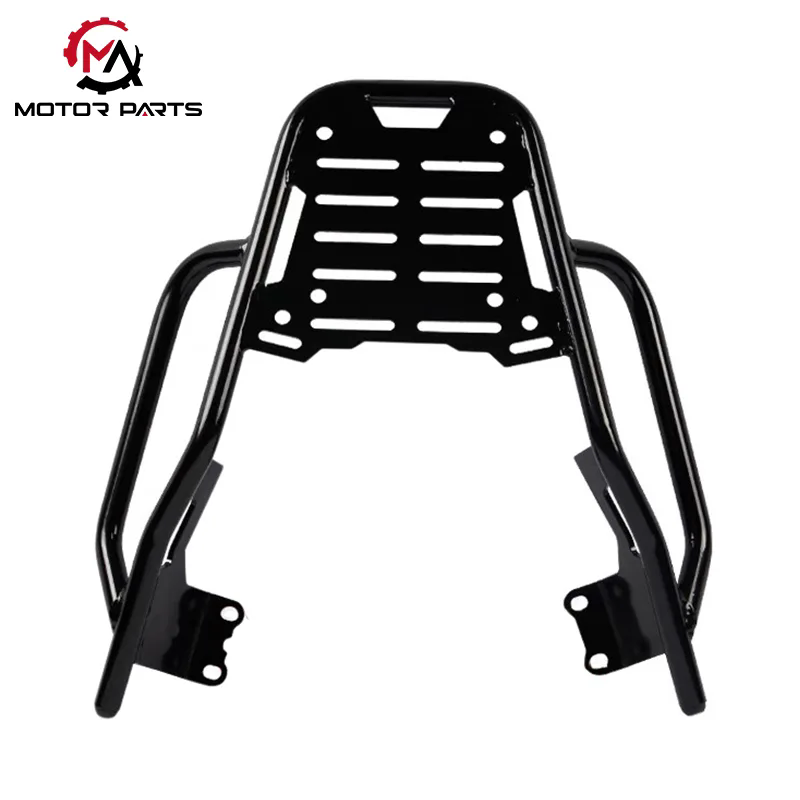
Motorcycle Storage Boxes — including tail boxes and side boxes — have also developed clear scenario-based selection logic. Tail boxes range from 10 to 50 liters, covering daily errands to long-haul cargo needs. High-strength ABS construction with anti-theft locks balances practicality and security. Side boxes are mounted in pairs on both sides of the bike: aluminum versions provide superior impact resistance for rough terrain, while ABS versions prioritize light weight and cost-effectiveness for urban commuting and light travel.
| Category | Core Selling Point | Key Specifications |
|---|---|---|
| Motorcycle Riding Phone Holder | Shock-proof + wireless charging | 15W fast charge, intelligent temp control, waterproof/dustproof |
| Motorcycle Helmet (4 types) | Scenario-specific protection | Full / Half / Facelift / Off-Road |
| Motorcycle Riding Glasses | Eye safety | Impact-resistant, UV protection, anti-fog, Force 7 windproof |
| Motorcycle Riding Clothes | Seasonal / scenario-adapted | Summer/Winter/4-season, Road/Off-Road versions |
| Motorcycle Riding Gloves | Hand protection | Breathable summer / insulated winter, optional smart heating |
| Motorcycle Riding Boots | Foot & ankle support | Road: snug fit / Off-Road: high-cut ankle protection |
| Motorcycle Windshield | Fatigue reduction | Tall windshield, nano anti-fog coating, reduces fatigue 30-40% |
| Motorcycle Storage Box | Cargo storage | Tail box 10-50L, Aluminum/ABS side boxes |